






Gary Sundin

Forum Replies Created
-
AuthorPosts
-
Gary Sundin
MemberThere’s a pretty big literature on altering stream acidity with limestone. The effectiveness of limestone as a buffer is directly related to surface area, so tiny grains are more effective than big rocks. I’ve heard of the water-driven grinders that Buzz mentioned, but don’t know how effective they are. Treating pH in streams this way is expensive and most streams will require constant, labor intensive management. In places where it’s done for mitigation of point source pollution the scale of operation involves yellow earth movers, truckloads of material, millions of dollars, to treat a small or medium sized stream. I’m no expert, but it seems pretty well shown that at least salmonids respond positively to buffering treatments.
Many Appalachian streams are unaturally acidic because of acid rain, but they also naturally have low pH and low buffering capacity. The pH of these streams has always dropped after big rain events, and brook trout are better-adapted to these conditions than most other fish.
I think it’s feasible to treat a small stretch of a small stream this way. On a grand public scale it’s arguably too expensive/difficult to justify except to mitigate for pollution. I think something like a 1000-lb. Alka Seltzer tablet that would provide a constant level of buffering for years, and would also not cause any other water quality issues, would be very useful. I’ve never heard of such a thing and I expect the market is wide open.
On the GA closed trout season topic, the DNR is trying to change that right now. There are pubic meetings about a proposal to make all state trout streams year round. Border states have had year round seasons for a long time.
G
Dec 19, 2014 at 9:57 pm in reply to: So, hypothetically, what do you think you'd need to pull this off? #88392MemberCheck with Mike Lewis, he has done some long drives across Mexico and Central America. I think you’d need a good car, enough cash, plans for dealing with key shit-gone-wrong scenarios, and at least rudimentary language skills.
G
MemberThat’s a fantastic trip with very impressive results. That fishery is great but learning the timing and habitat is not easy. This time of year, those puppy drum you were catching could just as easily have been 30 inch fish. I think you have an Atlantic squid (Loliguncula) and a smallmouth flounder (Etropus) in those photos.
G
MemberYes, the most important time of year approaches with perhaps 20 days ’til full-on striper time. I experienced an emotional jolt upon reading about rainbow trout low country boil. I remained uneasy after cheesecloth was mentioned. Just be careful.
G
MemberThat is, indeed, badass. Legitimately sight casting to tailing sturgeon must be one of the rarest events in all of fly fishing.
G
MemberI can only speak from limited personal experience and the conventional knowledge. Hopefully you’ll also receive some expert input.
As for time of year, I’d say when the water gets cold and clear, probably December-February. Using Google Earth and/or input from experienced folks, I’d look for areas with mud flats at low tide. Then I’d check the tides for that area and local sunrise times. I’d look for dead lows happening in the morning, not long after sunrise (for the first day of the trip). Haunt those mudflats starting 1 or 1.5 hours before low and look for fish through the low tide. The primary reason to choose the early morning, in my very limited experience, is because you’ll have the best chance at low wind. Local knowledge would be very nice to help you know how a flat will actually look at a specific tide, and to help you avoid getting stranded. If you go in with your light boat just before dead low, be careful and you should be OK. If you’re cautious, the worst case is you get stuck maybe 2-3 hours waiting on the tide.
G
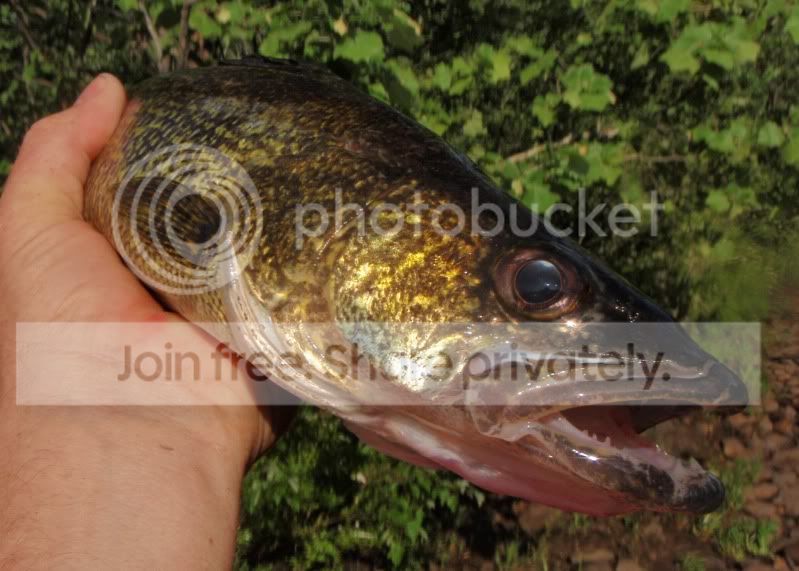
MemberTargeting walleye on the fly outside of the the spring run will be pretty tough. I don’t know anyone that catches them much on purpose with conventional gear, but there must be someone. I have caught them on the fly to the tune of one or two per trip, on purpose, in April and May, at a location near Toccoa, if that counts as “successful”. The place is only 1/8 mile long, but is best accessed with some kid of paddle craft. If you’re interested in that, I’d be happy to share the details by email. I’ve eaten every one of the dozen or so I’ve caught.
G
MemberCool. Is this something you can drag out and deploy with a canoe, or will you need a bigger craft? I’ve seen guys on Hartwell fishing with big lights, generators, the whole deal. Around Charleston, the flounder giggers have some pretty elaborate setups.
G
MemberI haven’t done much “serious” backpacking in GA for 6-7 years, so my info is a bit old. These areas are low-hanging fruit–they’re popular and will have some traffic on a holiday weekend. I’m guessing you’ve already checked these out, but just in case.
I used to hike the Conasauga River area fairly often and have put together a loop in there that requires some hiking on the FS road to complete. Anywhere you camp along the river trail will be adjacent to fishing. The trail crosses the river really frequently. Remote-ish, but fairly popular with hikers.
I’ve only hiked the Jacks area a couple of times. It’s bigger water and should fish well this year with all the rain, though it gets a bit warm in late summer most years. Lots of trails there to put something together.
The Chattooga has lots of miles along a big river. You couldn’t find a nice loop in there without hiking the paved road, to my knowledge. The section from Burrells Ford to 28 is really beautiful. It’s primarily stocked water (by helicopter), but the area is worth looking at. Could do a nice in and out there. With the big flow and relative remoteness, it really has a different feel than a typical stocker stream.
Beech Creek/Chimney Rock trail. This is a nice loop through rugged country, but most of the fishing is near the beginning and end of the loop. Requires a mile or so of walking on the FS road to complete.
G
MemberInteresting discussion. You could be right, I suspect it will remain just a matter of opinion unless young of the year are sampled in the lake. YOY sampled in the lake should be the easiest way to verify recruitment. There is so much ambiguity. From the quick look around I had through various press releases and popular articles online, I can’t tell if Atlantic strain fish were stocked between ’92 and ’05, and it definitely seems like a few supplemental Gulf strain fish have been released since ’05. Also, the age/weight relationships have a lot of variation. Of the several popularly-available charts (there are many) I checked out, 17 lb. fish could reasonably be 8-year olds, although most 8-YO would be more like 13-15 lbs. In fact, a non-negligible proportion (eg. 20%) of 8-YOs could be in the 19-22 lb. range in some populations. In other words, what you’re describing seems to fit pretty well with the 2005 stocking concept, in my opinion. If there were a lot of fish in the, say, 20-30 lb. range, that might imply otherwise. As is, the few big fish that are caught could be the really old fish, very well-fed 8-YO, or natural recruits. Regardless, if biologists consistently and effectively sample West Point (and I don’t know if they do) without seeing any new recruits, then I don’t believe we’ll see anything in the upper Hooch population that suggests natural recruitment.
As an aside, I saw stripers spawning gang-busters this spring for the first time in a location where I’ve been fishing for years. There was zero chance of success at the location, but it was interesting to see the act in a GA river. Mike Lewis was with me and I kept claiming it was gar until we finally got close enough to see the lines on the fish. So I think stripers probably spawn all over GA, even in unexpeted locations, in “ideal” conditions. It seems perfectly possible that a tiny fraction of the eggs survive during good years in a place like the Hooch. The question is whether there is ever enough to be significant to the population.
G
MemberHuh.
MemberBy all means, Zach.
MemberGary I have been looking for morels for the last couple seasons. Any tips on where exactly to find them in Georgia? Other than obvious places like big burns I don’t really know where to look.
Zach
I find them in river bottoms with large hardwoods and lacking sweetgum and pine. I notice my patches tend to have big sycamores and river birches nearby. I’m not a tree person and those are easy to ID with leaves off–so I don’t know if they’re particularly reliable indicators or just the trees I notice most. I find a lot under dense privet stands. I don’t find them in areas that have standing water or are flooded frequently (annually). They seem to prefer a band along the outer edge of the flood plain, on the edge of where the uplands begin. When I find a place with these characteristics I spend a lot of time squatting down and peering up under the privet and other undergrowth.
I’ve never hunted the Chattahoochee River, but from floats I’ve done on it I think there must be some good morel areas right there near town.
G
MemberNice bird, and on public land too. While you’re out and about the next few weeks keep an eye out for morels. Looks like a banner season shaping up around that latitude, from what little I’ve seen. A few stripers are showing up too, finally. This spring has been slow getting started.
…including night fishing on Lanier during which Jay Malyon and I got shot at…
What the hell? Getted fired upon: always a bad thing.
G
MemberVery nice Zach.
MemberI’ve had some limited experience in that system, not on Lake Seed. If you’re planning to fly fish for them I expect you’ll be looking up the river toward Lake Burton.
I had caught a few accidentally over the years and last spring I fished for them on purpose and caught two fish on each of three trips. So I’m hardly an expert. I used a 300 gr sinking head with white/gray and chartruese/gray clousers. I used a slow swing like for steelhead (I guess)–cast across, upstream mend, try to get the slowest, deepest swing possible. The place I fished had clear water and long stretches of channelized flow over small cobbles and gravel. Fish generally occurred in two feet of water or so, late in the day or at dusk, and bit near the end of the swing when the fly was moving slowest. If I stayed late, I could sometimes see the eyes of fish in shallow water reflecting in the light of my head lamp.
G
MemberI fished for them every spring for quite a few years but have been very lax the last two springs. The main rivers out of Lake Oconee have reputations for supporting among the best runs in the state. Neither river offers great options for non-powered boats, to my mind. The Oconee has an easy day float where you’ll almost certainly catch a few fish while getting buzzed all day by boat traffic. The Apalachee has a tough float where you’ll spend half the day portaging downed trees and won’t see anyone while maybe catching a few fish. I’ve not much experience on the Apalachee.
These rivers are relatively shallow with dirty water, sandy bottoms, lots of big woody structure, and muddy banks–no rocks or shoals. I fish them with a short sink tip and tiny clousers. Fish are found on the banks where there is dead water, in back eddies, and in creek mouths. Outside bends with sheer banks and patches of still water are best for me. My experience has been that where vertical banks enter still water fish will be almost touching the bank, just inches away from it sometimes.
Alatoona has a reputation for consistent schooling in the fall late in the day. I’ve never fished there, but I’ve fished for lake schooling fish elswhere. I’d think that would be both close to you and well-suited to a gheenoe.
G
MemberThey are migratory but occur in GA year round. We’re sandwhiched between their breeding and winter ranges. Apparently small flocks of a few or handful of birds are common during the fall migration. They move south over a pretty long period, moving at night in a series of short, low-flying hops between likely layover habitat. You probably stumbled across a place where a group holed up for the day. I get this information mostly from Birds of North America Online, which is an excellent subscription service with a large library of bird literature.
Seven is a lot by my standards. I jump a few in the spring and count it a big day to see 2 or 3. I generally spot them in river bottoms. I can’t help you with hunting them. I know one person that hunts them and I get the impression it is essentially a labor of love in GA (not unlike grouse hunting, though maybe not quite as bad). They are small, aren’t especially common, and fly fast and low through dense cover. It’s a good outcome to shoot a few in a season, I think.
G
MemberNo worries. I agree with Kent’s assessment 100%, and really do appreciate his hard evidence in support of the conventional wisdom. I just think that if fish don’t like photo-realistic flies, then the reason is fundamentally different than the uncanny valley reason. A pitifully pedantic point, I admit, and not that important. But animal rights groups use examples of complex social structures in fish as evidence that fish should be afforded human-like rights. If research was to show that fish experienced things like an Oedipus complex, or the 5 stages of grief, or some other complex psychological human phenomenon–that would be a big deal, and a great triumph for animal rights types. The topic really piqued my interest. The analogy was fascinating and I never would have thought of it.
Also, I’m surprised the fly received such praise. What is the body made of?
MemberInteresting. I think the assumption that the realistic flies don’t work as well as “impressionistic” flies is debatable. I’ve never read or heard any real evidence that this is so. Perhaps the Uncanny Valley phenomenon applies to anglers in their opinion of realistic flies. As an analogy for fish behavior it is provocative because it looks like the human behavior. But I think our discomfort with realistic animated films depends a good bit on our ability to abstract and our foreknowledge that it is not real. Fish don’t judge realism, they respond to stimuli in ways that have worked for them evolutionarily. If a fish does reject a “realistic” fly in favor of an “impressionistic” one, it is because the rejected fly actually wasn’t a realistic stimulus–not because it was somehow too “realistic”. I think it’s likely that fish are more stimulated by a trait like “furiously waving appendages” than by “same shape and color as an actual species”. Anyway, I think the fly shown would stimulate fish just fine; but it would be expensive and tedious to cast.
G
-
AuthorPosts