






Gary Sundin

Forum Replies Created
-
AuthorPosts
-
Gary Sundin
MemberVery enjoyable.
MemberGoddam, 189 fish?
MemberDamn Mike, you get around.
MemberThat looks like a cool fishery.
MemberNice work Mike.
MemberThat’s high quality Matt.
G
MemberI normally don’t get interested in “geary” type questions but this one is compelling. I fish either 1) walking/hiking, or 2) kayak supported. Kayak supported I bring 2 or 3 32 Oz nalgenes. On hot days I usually remember to freeze one solid and stick it in my little hard cooler with 2 beers. For very hot, day-long carp outings I’ll add a big G.ade as well. For hiking trips I like the bladder-on-the-back. I have a loweprow bladder that fits into my fishpond backpack. I used to laugh at geary types and their pretentious vest packs, and silly, dangling bladder tubes, but now I’m a conplete convert. I can carry up to 2.5 liters, it is a cushion against my back, and I never have water bottles to fish out from under my lunch or whatever.
MemberI’m located in the central GA piedmont–70 odd miles straight east of Atlanta.
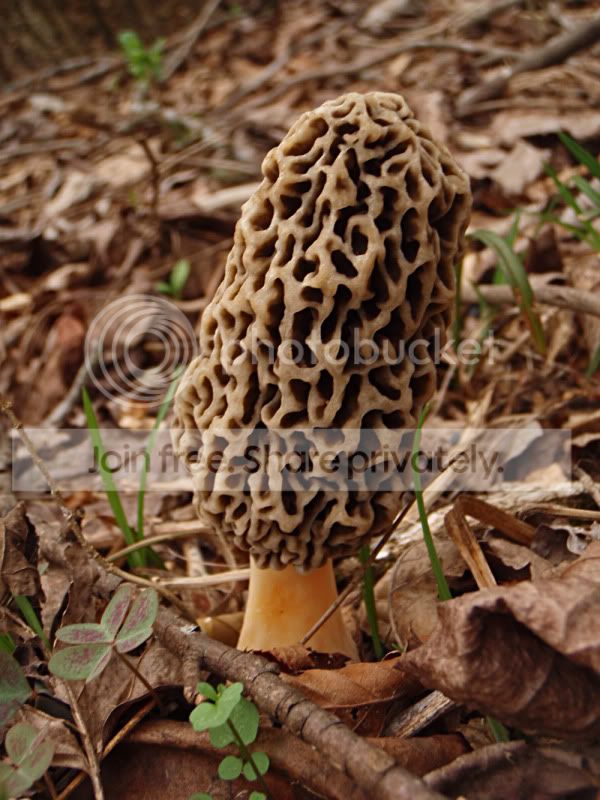
MemberMy spots have started being really productive in the last 4 days. There should be lots of morels on the ground on opening of bird day. My best finds have been in hardwood river bottoms with darkish, sandy soils, under privet thickets with relatively low leaf litter.
G
MemberThat was lovely, thanks.
MemberI’ve been out twice just to hit a few likely spots and verify the non-presence. I made a quick stop just this afternoon and found two small false morels. I think we’re still a week or two early, but the next warm stretch after this rain might put things in order.
Gavin, I’m a novice to morels in this area. I’ve hunted chanterelles with considerable success the last couple summers, and bag up oysters when I happen upon them, but this will be my first season spending serious time on morels. However, the guy I pick with, much experienced, has his best luck in major river bottoms under ash, sycamore, and tulip poplar. Best finds are often under the dense, invasive privet thickets which are the primary understory in most of our local bottoms.
G
MemberI like it.
MemberVery nice.
MemberGary I don’t mean to be too nosey but if you could what would be a breif run down on what you do?
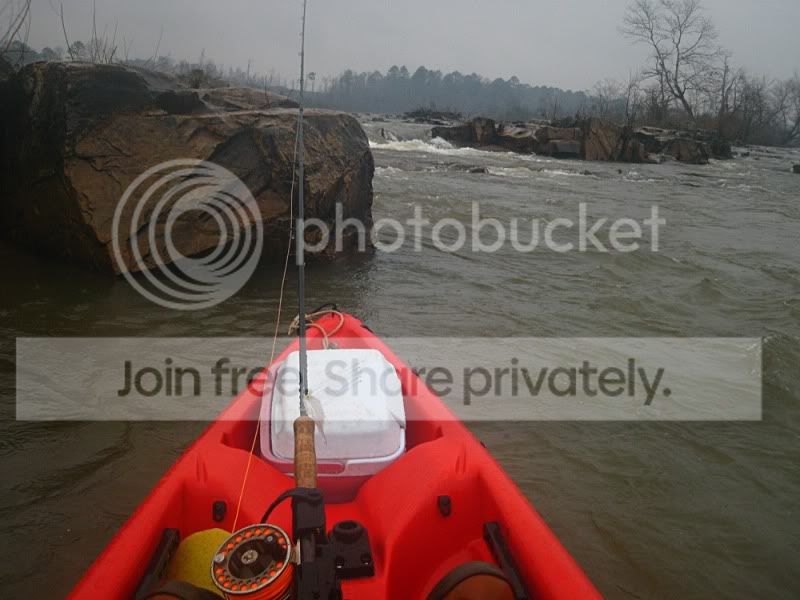
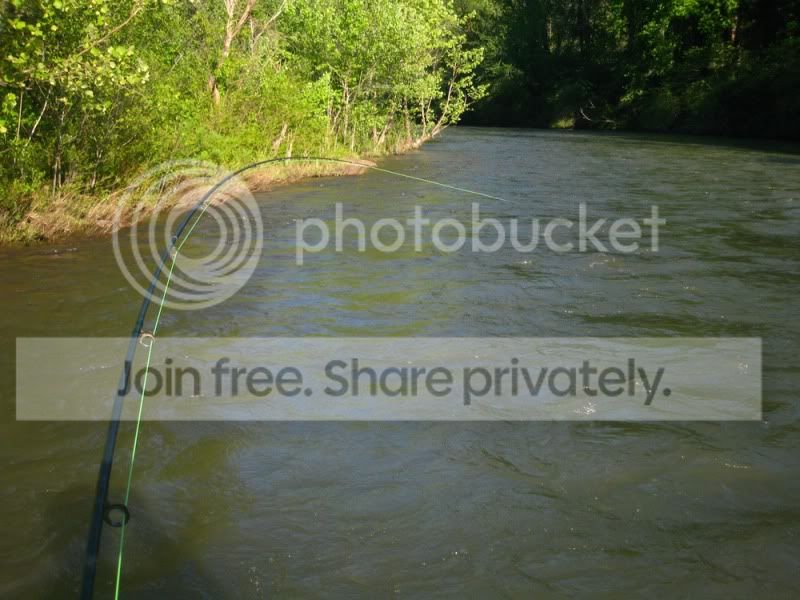
In the few places I go I usually fish around shoals. The fish are sensitive to flow and stack up in places where lots of water is coming down a chute or drop. I use a kayak to hop around to these spots. I like to make short swings down into the whitewater below a drop. I also do well standing right beside a plunge and high sticking a fly through it. When fish aren’t in the whitewater is when I do more like a steelheader and make a lot long casts across a channel and try to mend to make different swings. I use various sink-tip lines.
This chute was very good last spring with lots of fish stacked up behind the drop.
Here was a place where a lot of long swinging worked.
G
MemberIf he’s really a good buddy and you’re up to drop some bank, a child backpack is a very nice thing. It’s not fishing related, but it will do a lot to get him outdoors with a baby/young toddler. I used one a lot for fishing and hiking with my daughter.
G
MemberI really don’t know anything about 2-handed casting, but I swing for stripers all spring long and have often thought spey techiques would be effective. Where I usually fish I don’t make many long casts, I like to cast upstream at times, and the area is wide open, so I’ve never felt compelled to make a move towards 2-handing. I’m sure it will work, though. Downstream swinging is far and away my best method for catching those spring run linesides.
G
MemberI think Zac has it. I’ve seen that name used before. The market names of fish can be pretty misleading, often intentionally so. “Steelhad salmon” sounds more exotic than “North Carolina farm-raised trout”. I probably wouldn’t order it. If I was thinking of ordering it, I would absolutely ask what it is and where it came from. I rarely buy fish and never buy it unless I know what it is and where it comes from. I wouldn’t expect others not to order it. We all have our little things and seafood is one of mine. That guy ordering steelhead probably uses cloth diapers on his kid or something, so he’s even more righteous than me in the final judgement.
I sometimes eat fish I catch, especially in the spring. If I’m fishing often anyway, and I want to eat fish, I might as well take advantage of the cleanest, most environmentally friendly source of fish I have.
G
MemberLooks like fun.
MemberI have some limited user experience with RFID technology and animals including just a few experiences with fish and quite a bit of experience with turtles. I don’t know many details about how the technology works, and I know nothing whatsoever about RFID paint.
The use of implantable tags or chips (PIT-passive integrated transponders) is a very common method of marking fish and other animals for re-capture and identification. These are generally little tubular passive transponders just a few mm long that are inserted under the skin or into the body cavity of an animal via a simple syringe. In all my use of them, the animal has to be above the water and within a few inches of the scanner for the tag to be read. The same type of tags are used to record fish passage, when a receiver antenna is placed across a stream, fish-passage ladder, canal, etc. There are also some scanners that are like a waterproof wand that can be carried around and placed in the water to scan tags that are close. In all of these applications, the tag has to be close, within maybe a meter or less (although there may be some that can read from a bit farther away?).
I understand where you’re coming from. The idea of simply walking the banks with a scanner and antenna, noting the location of all your fish without disturbing them, is very attractive. For larger fish in relatively shallow fresh water, regular radio telemetry can be used to locate fish. Acoustic methods can be used for large fish in deeper water and in salt water. I’m not on the cutting edge of fisheries research technology by any means. But the problem of tracking fish and wildlife in their natural environment is a large and very active field.
Of consideration also, is the potential effect of using even somthing as small as an earing to mark fish. I would guess that before a fisheries biologist would publish on using a novel technique like that, he/she would want to see some controlled lab studies estimating the effect of a hard external tag on the fishes’ behavior.
It sounds like cool idea with potential value. Curious to see what you discover.
G
ps. the several scanners I have used come from this company.
MemberI use conventional braided line (50 lb powerpro) for backing right now on my 6 and 8 wt reels. The primary reason being that I live an hour from the nearest shop and just wanted something to throw on there. It’s much more expensive. My main concern is that the braid will eat the guides. I’ve fished all though carp and striper striper seasons and have been into the backing some but haven’t ever been way into it. I don’t notice any damage to my guides yet. Couple problems I do notice: Once it gets wet the powerpro bleeds that camo color onto the fly line a little. Also, if you absently rest your finger on it while a fish is pulling, it will slice you like a razor. That is somewhat true of any backing, but 50lb braid is a saw.
My overall impression is that the diameter is just too small to be ideal. I think it’s justified maybe for false albacore fishing or such where you actually want to have 300+ yards of backing.
G
-
AuthorPosts