






Fly Tying and the Uncanny Valley
Blog › Forums › Fly Fishing › Fly Tying and the Uncanny Valley
- This topic has 19 replies, 15 voices, and was last updated Sep 22, 2012 at 4:50 pm by
 Justin Witt.
-
AuthorPosts
-
Aug 21, 2012 at 7:09 pm #6061
Zach Matthews
The Itinerant AnglerYou guys are familiar with the Uncanny Valley theory right? It’s the idea that as robotic human beings, whether physical or in 3D animation, get closer and closer to the real deal, they create feelings of revulsion in people because they are just not quite right. This is still why even in a movie like the upcoming “Wreck-It Ralph” by Disney, the animated characters look like cartoons, and the supposedly real-human characters also look like cartoons. The last time a major studio tried to make photorealistic people with computer animation was “Final Fantasy: The Spirits Within,” which was a colossal bust both because it sucked to begin with and because the Uncanny Valley problem weirded people out.
I think the same thing applies to fish.
Take a fly like this for example:

It won best new fly at the IFTD show. It is a fantastic pattern; looks incredibly realistic. I bet it would be completely outperformed by a standard Del’s Merkin, too. Does a merkin look like a real crab? Nope, but fish eat it. Something about making the pattern too close to the original just doesn’t work, maybe because the legs can’t sweep back like a real swimming crab, or because the fibers just don’t hold enough air like in a photorealistic mayfly.
Has anyone ever had success fishing photorealistic flies? I’d like to know.
Zach
Aug 21, 2012 at 8:14 pm #53443Jason DeBacker
MemberI have not really tried – but I hope this post brings Graham Owen back to the board!
Aug 21, 2012 at 10:40 pm #53444 Mark SidesMember
I have to believe those would trigger a Striper hit in the N.E. and Chesapeake bay area…..
Zach, do you have a link as to how those are made?Aug 22, 2012 at 12:34 am #53445M. Wood
MemberAre these bodies going to be available for tying?
Aug 22, 2012 at 2:07 am #53446Jon Conner
MemberI’m with Zach on these things, good analogy. They’re sort of like those little molded nymphs made of rubbery plastic that don’t catch fish even though they’re very realistic. Realism without movement or impression of life has never out fished
Aug 22, 2012 at 2:22 am #53447Mike Cline
MemberUnfortunately, some people give fish too much credit. http://www.peta.org/issues/animals-used-for-food/hidden-lives-of-fish.aspx
It’s always been my theory that if you put something that looks like food in front of a fish, they will try to eat it.
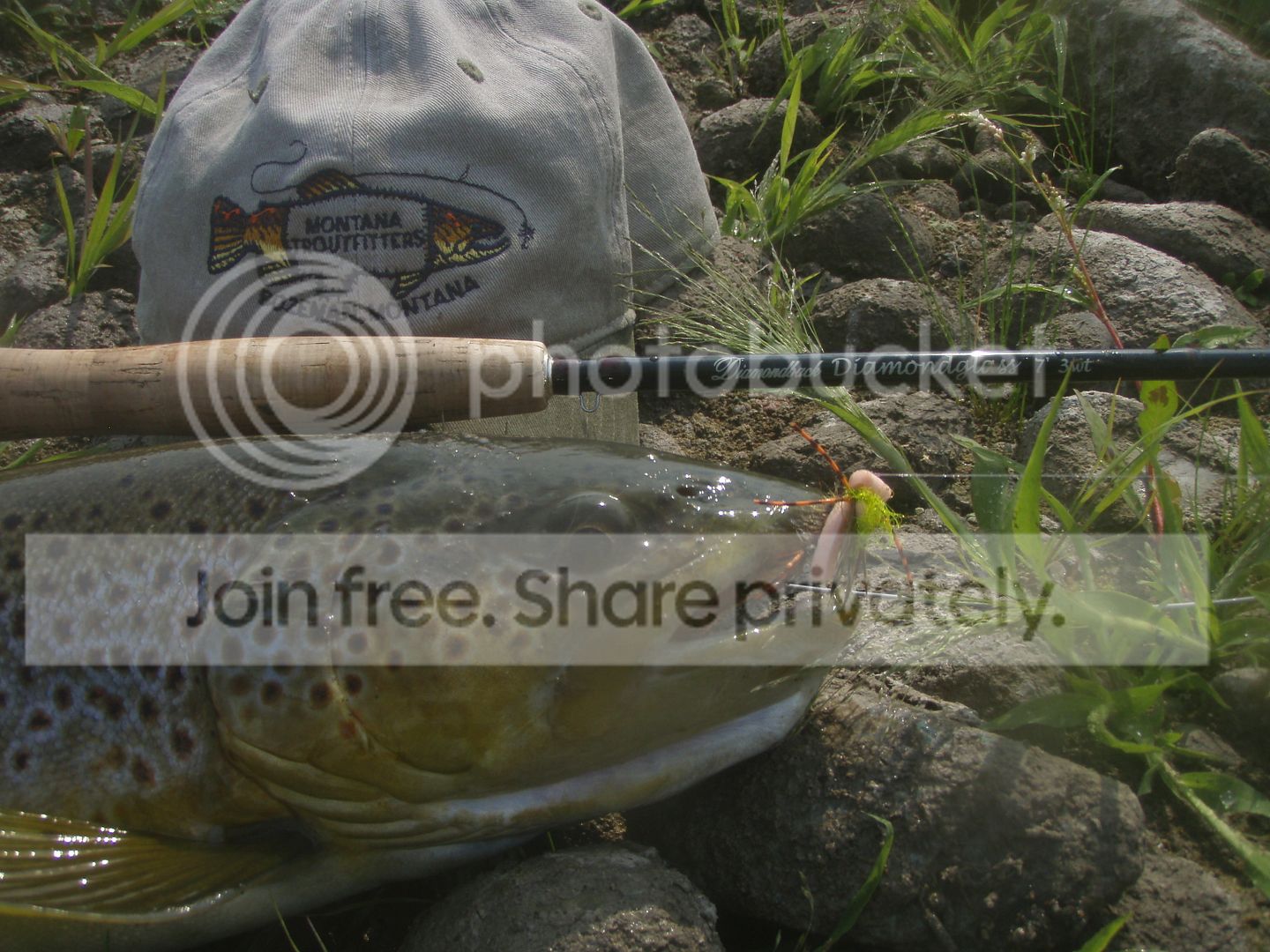
I generally don’t see too many Pink grasshoppers unless I’ve been drinking.Aug 22, 2012 at 3:03 am #53448Gary Sundin
MemberInteresting. I think the assumption that the realistic flies don’t work as well as “impressionistic” flies is debatable. I’ve never read or heard any real evidence that this is so. Perhaps the Uncanny Valley phenomenon applies to anglers in their opinion of realistic flies. As an analogy for fish behavior it is provocative because it looks like the human behavior. But I think our discomfort with realistic animated films depends a good bit on our ability to abstract and our foreknowledge that it is not real. Fish don’t judge realism, they respond to stimuli in ways that have worked for them evolutionarily. If a fish does reject a “realistic” fly in favor of an “impressionistic” one, it is because the rejected fly actually wasn’t a realistic stimulus–not because it was somehow too “realistic”. I think it’s likely that fish are more stimulated by a trait like “furiously waving appendages” than by “same shape and color as an actual species”. Anyway, I think the fly shown would stimulate fish just fine; but it would be expensive and tedious to cast.
G
Aug 22, 2012 at 3:23 am #53449 Kent EdmondsMember
Funny Zach, but I had a discussion today with a bud about the photo-realistic patterns. I don’t think most I’ve seen would be effective for me. Maybe for a dead-drifted dry, but I seldom chase the slimy fish that eat those. 😎
We always heard the mantra of “size/silhouette/color” for matching the natural, but I think movement is the #1 trigger to a bite. I personally would rather have more impressionistic pattern with a general s/s/c match that has a natural, “alive” movement.
An example is the hellgrammite, a major food source for shoal bass on the Flint. For near 20 years, I tried tying a realistic hellgrammite. They are distinctive critters and pretty complex.
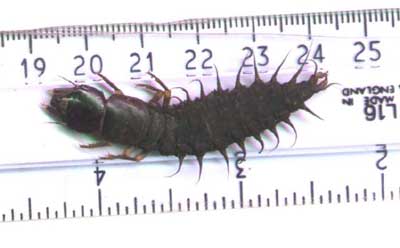
Though not the artist that some of these realistic tyers are, I have come up with several flys I thought were near perfect. I was weaving bodies for a different color underneath, tying in the 8 pair of lateral filaments with biots, duplicating the gills underneath with tiny tufts of antron, etc, etc… For a long while I thought the white gill tufts were the ticket as they really glow underwater when they puff out (see photo below).
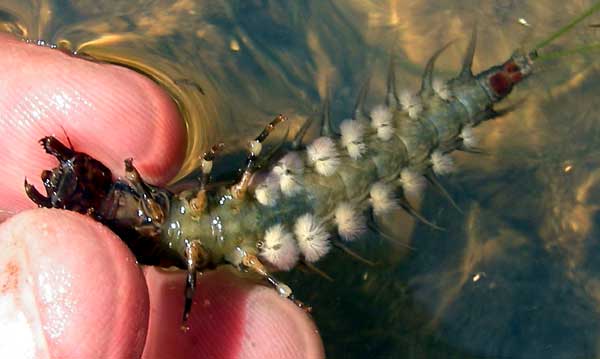
Completely ignoring the hours I had spent at the vise, the shoal bass didn’t like my creations as well as a big wooly booger. Or a basic zonker strip on a hook.
I continued to dig hellgrammites and take photos. Finally I started to turn them loose in the water and watch how they moved. On the bottom or in a weed mat, they crawl, creep, or maybe scurry. But when adrift in the current (and when they’d be most available to fish), they wiggle frantically trying to find a “foothold” with their legs or rear prolegs. They arch, curl and wiggle side-to-side almost simultaneously.
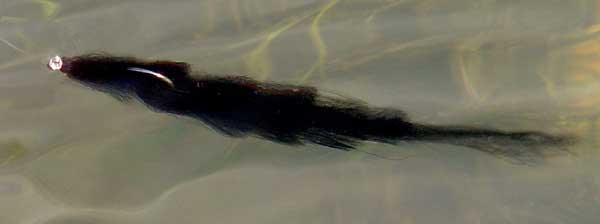
To date, my most effective imitation is shown above -a zonker strip trimmed to look segmented. It moves, breathes and wiggles (and it’s easy to tie). `Works just fine without legs, gills, or any of that other stuff. As Guy Turck said when asked about the effectiveness of his Tarantula, “it ain’t the meat – it’s the motion!”
Kent - FlyFishGA
Aug 22, 2012 at 8:05 pm #53450The Itinerant AnglerKent –
A+ post man.
Aug 23, 2012 at 1:05 am #53451MemberNo worries. I agree with Kent’s assessment 100%, and really do appreciate his hard evidence in support of the conventional wisdom. I just think that if fish don’t like photo-realistic flies, then the reason is fundamentally different than the uncanny valley reason. A pitifully pedantic point, I admit, and not that important. But animal rights groups use examples of complex social structures in fish as evidence that fish should be afforded human-like rights. If research was to show that fish experienced things like an Oedipus complex, or the 5 stages of grief, or some other complex psychological human phenomenon–that would be a big deal, and a great triumph for animal rights types. The topic really piqued my interest. The analogy was fascinating and I never would have thought of it.
Also, I’m surprised the fly received such praise. What is the body made of?
Aug 23, 2012 at 2:35 pm #53452philip fibiger
MemberSo the one “photo realistic” pattern that seems to work pretty well in saltwater is the chocklett’s gummy minnow. It’s not an exact replica (no fins), but it is definitely a lot closer to an actual baitfish than an EP minnow or a clouser, and it’s very successful.
Aug 23, 2012 at 5:57 pm #53453 Bob RigginsMember
I’m not sure if the uncanny valley, more commonly known as Bukimi no Tani Gensh[ch333], has anything to do with it. That seems to require an assumption of athropomorphism, which may, or may not apply. I think kent is correct in his assessment. Fish react instinctively to movement and shadows and don’t sit around a ponder how pretty it is.
Aug 24, 2012 at 1:02 pm #53454The Itinerant AnglerHahaha, touché Bob.
Aug 24, 2012 at 6:40 pm #53455 Colin M.Member
I tie a really really realistic clinger pattern that i picked up from a gentleman named Greg Glitzer, who happens to be a dynamite tier and fisherman as well, it works…it works really really well.
Aug 24, 2012 at 7:07 pm #53456MemberThis is an interesting thread.
I think the comparison of a gummy minnow to the crab is flawed in that the gummy has movement and is also (I think) translucent. Looking at crab flies with track records, there is everything from a rabbit strip pulled over the hook type (Avalon) to the Merkin style and flat feather over the hook, and all of them have movement, with rubber legs, fine fur, marabou, etc., I saw nothing on that crab that appeared mobile. I would not tie that fly on the end of my line when fish were present and I wanted to catch something.
JCSep 3, 2012 at 11:55 pm #53457Jack Kos
MemberIt seems in this regard I’m a bit of a conformist and have to side with the majority. It’s impressionistic every time for me. Like Kent said, I feel movement is one of the most significant triggers. There’s a reason why tiny rubber legs are so effective on nymphs. Like most tiers I went through a phase of trying to tie things that look like insects – now I try to tie flies that move like them.
But perhaps even more important is actually getting the fly in front of the fish. We spend a lot of time working out what the ‘best flies’ are, but the reality is that if an item that looks even vaguely like a food item is presented to a fish at the depth it is feeding at and in a manner that it is accustomed to food coming to it (i.e. drag free), it will probably eat it. Often this has to do with the weight of the fly and the way it’s presented more so than what the fly actually looks like.
The success of photorealistic flies also depends on the assumption that trout see food items in the same way that humans do. I’m not a biologist and have next to know knowledge in trout vision, but my inclination is that they don’t. At night, for instance, I know fish use their lateral lines to sense movement – does it matter remotely what the fly looks like at a time like this?
Just one trout fisherman’s views, but I imagine they’re applicable to most fly fishing disciplines.
Sep 4, 2012 at 3:34 am #53458Karlin Bilcher
MemberAnyone ever seen the vid – “The Underwater World of Trout”. It’s amazing stuff by some crazy scuba video guy, I think he goes by Ozzie. It’s dated and of very low production quality. Anyway, he documents hours of underwater video of wild trout in their natural habitat. One of the main points of his work is to show that the major way that a trout perceives its world is through its mouth. They are constantly taking things into their mouth and rejecting them in an instant – sticks, grass, pebbles, cigarette buts, anything that naturally drifts past their face.
The best fly in any situation in any water at any time for any trout – is a drag free drift! Not sure how this applies to high level salt water predators but I imagine presentation, cast, strip, movement ect. wins the day in those situations.Sep 4, 2012 at 1:50 pm #53459The Itinerant AnglerI’ve seen those videos and actually own the one which has Labrador brookies spawning.
Sep 5, 2012 at 5:28 pm #53460 Peter E.Member
Personally I like to tie imprssionistic flies and as such thats what I fish. But that’s just me. Kent would you mind posting a picture of that fly when it’s still dry?
Sep 22, 2012 at 4:50 pm #53461 Justin WittMember
Most of my thoughts and experience with this question are relevant more to streamers than to other types of flies, and wouldn’t apply at all to selective fish feeding on top during a hatch, but that probably reflects what most of my experience over the last several years down here has been, which mostly consists of trying to stimulate already well-fed fish to eat large imitations of other fish.
But on that note, and under those circumstances – I think difference is more important than similarity. A large predatory fish under normal conditions sees bait all the time. Thousands of presentations of basically healthy prey that represent an imbalanced equation for the predator as he calculates energy expended vs. energy potentially gained. They are looking for difference; for prey that is acting or presenting itself differently from the rest, indicating injury, weakness, or poor judgement in terms of action. And so when we bounce a clouser or swim a sex-dungeon through its area that looks in no real way anything much like the similarly sized bait in that environment, the predator turns its attention to that difference, not the similarity we’ve perhaps tried to create between the fly and its normal prey, and the instincts provoke an attack.
My dad taught me this lesson first when I was a little kid fishing muskies and smallmouth up in Hayward Wisconsin where i grew up. I was already tying flies by then, and trying very hard all the time to create more and more imitative representations of the baitfish in our area, while my dad consistently outfished me with rapalas, daredevil spoons, and Mepps spinners that to me looked absolutely nothing like the creatures the fish we were after normally ate. Then one day after we saw a northern pike attack a bluegill in the lily pads just off the bow of the boat and then spook off to deeper water my dad fished the wounded six inch fish out with a net. It was turning orange! He showed it to me and then put it back. Bluegills up there always have a little orange on them, especially when they get big, but this thing had been hammered so hard it was bruised over its entire body, and its color was changing completely as it swam in goofy little circles trying to get its equilibrium back in shape. Suddenly his blaze-orange and yellow rapalas made more sense. And a few minutes later another northern shot out of the darkness and inhaled it. That’s when I quit trying to make my flies look and swim like healthy specimens.
And some of the stuff I fish down here these days looks like it came from outer space.
-
AuthorPosts
- You must be logged in to reply to this topic.