






Ben Cochran
Forum Replies Created
-
AuthorPosts
-
 Ben CochranMember
I agree with Neal. As a matter of fact, he turned me onto this software and I now use it as well. I have my files load to a folder that I open in Bridge, they both seem to load at about the same time. Also, I have my Bridge set to large preview so, each shot is loaded full screen.
It is best used for setup preview but I would never dream of using it on the full shoot. I prefer the AD to see only the shots that I am proud of. 😉 ;D
Will, drink some of our coolaid, we have been waiting for you on the Mac gifts side 😀
Ben CochranMemberIt really isn’t anything more than an automated algorithm for exposure blending. It amazes me how many different names they will come up with, for this process, as it was first used back in 1952. HDR hit the map as soon as the digital darkroom made it easy for “everybody” to start doing it. The difference is, HDR was then taken to a different level of tone mapping while exposure blending stayed on the premise of blending exposures. This in camera algorithm is nothing more than an automated exposure blend that pumps up the shadow density and stops down the specular. I can see applications, such as midday sun but I wouldn’t rely on it for all other application’s. Perhaps I am just an old school sort but I prefer to have complete control over my equipment and the finals that I create from my acquired knowledge.
The Nikon bodies actually function better with the noise reduction disabled, even at high ISO’s. If the triangle is set correctly and the angle of deflection, as well as framing of subject, is set to a good relative bearing and range, some descent high ISO’s shots can be captured, with very little noise, if any. I wouldn’t dream of doing this on a big assignment but did decide to test out the D200 during this one. These were all shot with the D200 @ISO 1600, (David Anderson is the concert pro photographer, I just pretended to be one on this shoot 🙂 ) with no noise reduction in camera or in post, they are test shots and outtakes so…
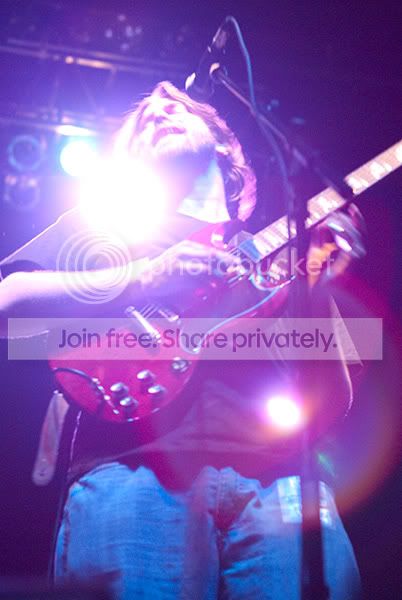
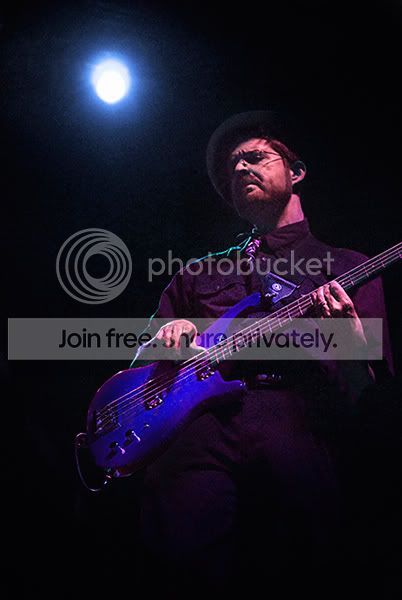
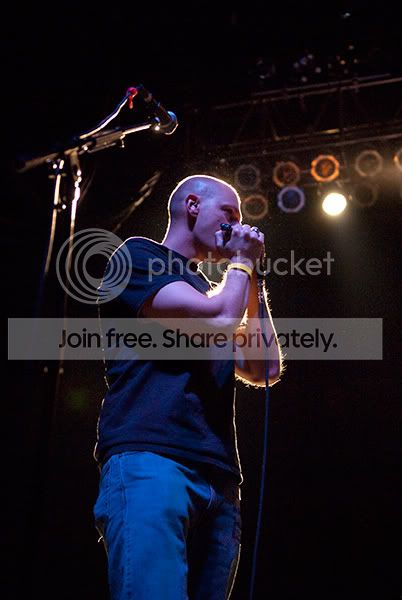
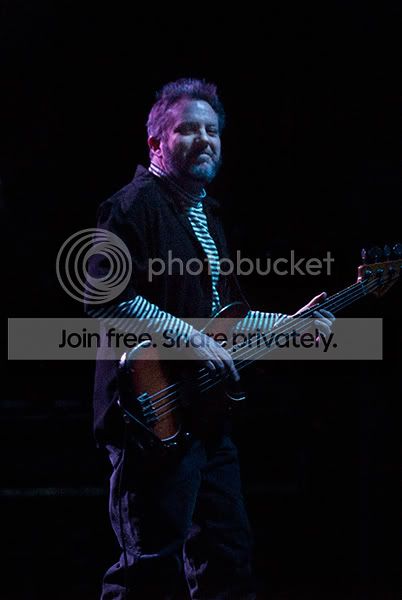
This last one was also shot with the D200 @ ISO 1600 and then later converted to B&W but again, no noise reduction software was used.
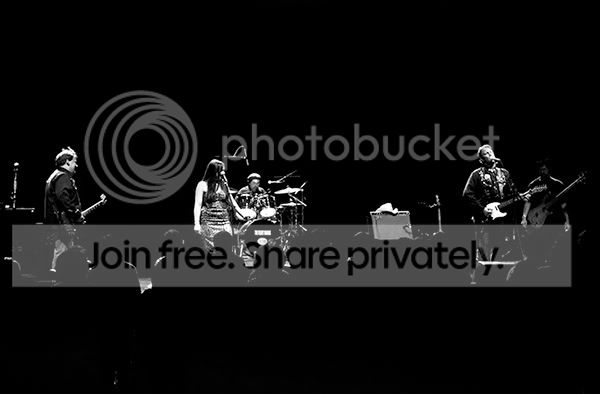
A fun shot of a friend on full frame @ ISO 3200. Again, no on board noise reduction or post, both samples are from Nikon bodies.

I would never shoot this high for finals on an assignment, or on set- but then again- if I needed to or if it was for artistic flare, it is nice to know ones equipment well enough that they can take it into the perceived forbidden zone. The D700 can go up to ISO 25,600 so, there is a lot of room to play and experiment.
I really think that enabling the D lighting (no onboard in the D200) would of ruined these shots and made it even more difficult to recover in post. Like I said though, this is just my opinion, not one that I force on others, and one that I will admit to being more of an old school approach.
Ben CochranMemberI know where you are coming from David but in my case, I learned a very valuable lesson. After having an art department destroy my shots and publish them, I have become a Freudian case study when it comes to having more control of my final output. Those shots were processed and converted to CMYK so badly that I won’t even show them in my book.
I get kind of nervous at the cafe now ;D
Ben CochranMemberWill, I hope you don’t mind if I jump in here. A true 18% grey card will reflect all color casts equally and this is what allows for a proper WB as we adjust the hue to 18% grey on the card, that we photographed in with the composition.
I love a good high key shot but in many, especially product photography, there is a strong need to also adjust for the black points. As we mentioned earlier, 255, 255, 255 will not lay down any ink and this means the whites will be dependent upon the paper and fade with it accordingly. Also, high key shots are tricky as they most often want to over expose the subject. If you look at your neat pipes, you may see that the darks are a bit over exposed. By also WBing with your black points, this will help bring more of your contrast back into the subject. If there are no black points, try for a grey tone with a close 18% grey being the best bet.
Ben CochranMemberZach, I didn’t mean to ignore you, just letting Bob answer for himself. I did want to mention that I too enjoyed the article and his cover shot was really cool, as well.
I have to chuckle, when I hear people complain about how heavy their camera and lenses are, then there is Bob and his wagon sized compact box
Ben CochranMemberGood stuff David! I know that Neal already has the EyeOne 2 and calibrates on a regular bases and uses both his Uni Body and Cinema Display. i will add that the cs4 ACR does a great job of white point and black point adjustments, for white balancing. Off of the card, the white balance may go a bit over the 245 sweep but does not hit the 255 “no ink” zone. I do agree with dialing in the 245 sweep as that will provide enough ink to paint the 18% grey on many media types.
I do have a question for you though. What are your thoughts about Snow Leopard? I know that it takes far greater use of the graphic cards but the increased brightness kind of makes me nervous. I proof on a R2400 but this is notorious for printing dark. I am using Snow Leopard but Apple has not been able to answer my question’s about how it makes better use of the gamut; is it absolute of perceptual?
Ben CochranMemberI haven’t tried the beta but I am curious about what is new on the post production side, seems that most will appear in ACR and am curious about what may appear with CS5.
Hey Bob, glad to see that you made it over here! Great group of folks on this forum and the fly fishing related photography is fantastic. Nervous about shooting more river scenes with you, as we seem to bring buckets out of the sky LOL turned my 70-200 into a canteen. 😉
Welcome to the forum!
Ben CochranMemberThat is pretty cool Henry! Have you given a thought to reversing the colour’s; black to white? I think that would look awesome, with the reversed B&W colours and then extract the white, printed on velvet fine art paper. Kind of like pastel monotypes
I have seen some of the metal backed prints, they are nice but I think that they are a bit over rated. What I mean by this is, the fact that they have base layers so the metal, itself, is rather mute with its reflective properties. I think that the same quality can be achieved with high end museum quality paper and high grade inks. I saw a lot o prints glued to metal sheets, in the Baltic, and it was rather interesting as well as classy.
One thing that I love to do with dark prominent B&W prints is, print them on matt paper but set the printer to lay the ink down heavy with preset drying times between each pass. Gives the blacks a brushed silk kind of look.
Ben CochranMemberDude!! You are killing me!!!!!!!!! I was suppose to be up in the steppes, for several months, and down in Ulaanbaatar. Had to cancel due to some serious family illness.
The photographs are awesome!! Sure that my rugged mountain Yak’s would not of held a candle up to that incredible and quite comfy river resort of yours. ;D Someone told me about these a while back but I just haven’t had the time to come back and comment. Love the shots!!!
Ben CochranMember105mm 2.8 VR… One of the best lenses that Nikon has on the market. It is incredibly sharp and extremely versatile.
The 200mm 2.0 is so sharp that you may cut yourself, don’t think you are ready for close to 5 grand though 🙂
Ben CochranMemberSorry for the delay… Will, one of the biggest problems with any sort of established rates is the fact that they do not take everything into account. When we shoot for commercial shoots, several things must be taken into consideration and we must remember the purpose of our end product: Marketing and/or Advertising. The size of the company must be accounted for and what demographics they are targeting as well as how large the sample group is. One of the key components in pricing is determining how much exposure the images are going to have. The main thing to remember is the fact that we aren’t just selling photographs as much as we are representing an entire sells force through or photographs, they are revenue-generating engines. The more exposure, the less value the images will have for resell potential so, this too must be factored in.
One of the worst things that can happen to a small company is drastic growth; I have seen more companies destroyed by accelerated growth than anything else. Having said that, a properly structured company will have a proper business plan and within the BP are short term budgets with revenue targets; this information is invaluable to us as it allows us to measure the amount of exposure our images will have over the contracted user license period. There is nothing wrong with establishing a rate in accordance to their growth, after all, it is the business that we want and not just the one time sell. Remember that your photographs are the same as an entire sales team so, don’t discount them and function more as a marketing/advertising consultant. Never ever offer a discount as all that does is condition the client to always expect one, as well, it is also a kin to saying; “My work rate is this but only worth that, so I will discount”. The company will use these images as marketing collateral and the images are a first impression of culture as well as introduction of product, in which margins will be measured.
The main thing, that I am trying to get across here, is: Rate according to their business objectives and remember that you are both a consultant as well as an entire sales force (through your images). In smaller company’s we have to keep driving that point home, when contracting with Fortune 500 companies, you would be amazed at how much easier it is; they understand the value. Never give anything away for free but remember that trade does have monetary value. If you choose to be an investor, make sure that there is a contract in place that warrants you compensation at a predetermined time and/or benchmark.
Also: We are neither developing their final product, nor do we supply the windshield wipers. We are skilled knowledgeable professional that are positioning their products into the marketplace; in such a way that conveys their culture and helps promote the emotional sale mechanism. Every commercial photographer should also study marketing and advertising strategy. The consultant aspect, coupled with delivering a premium photography product, is what allows one to turn a single location assignment into 10 additional assignments, across the US. (sorry, I am still a bit excited about this one 🙂 ) Don’t limit the professional designation to a viewfinder, we are truly service providers; or at least should be.
Make sense? (This isn’t written in stone as much as it is just one snippet of my business outline and approach)
Don Thompson, that is very true and is exactly what I was saying. I can’t agree with you more, lower income persons deserve to have wedding photographers as well and they shouldn’t have to take out a loan to do so. I couldn’t imagine being able to purchase a Ferrari for the same price as Dodge Neon. The scale should be priced according to ability and even a first time photographer can do a darn fine job, for one of the most important days in couples life. The only problem that I have is when a photographer misrepresents themselves as a seasoned pro and takes a rate higher than their ability; this just makes the rest of us look bad. Quote it according to skill level and use it as a stepping-stone and learning tool: In the end: The client makes the decisions, based on the honest information that they were afforded up front. If one is truly a seasoned pro and doesn’t like the rate, find a new client!
As skill level and applied knowledge grows, adjust the rates up accordingly. If not, be prepared for higher expectations at a stalled rate and no friends left in the pier group 🙂
Ben CochranMemberWow lots of food for thought!!! Ty for the post Ben:)
I’ll offer this as more of a question than a position.
I do believe there are circumstances that warrant wavering from established norms regarding rates . If as a photographer I simply respond to market demand regarding product – ie- demand and supply – then things are pretty much Black and White:)) I make widget/market says widget is worth/you pay me that cost for use of widget.
As a photographer – I can also look at being an investor . If I see a product/outlet in it’s early development stage that meshes with my own sensibilities I can choose to help make that happen/develop – that does not mean working for free – but it may mean investing in someone elses vision with the lowered initial compensation that a start up can deal with. The base concept is developing a relationship that is mutually benificial over the long run , that allows for growth on both parts , both financial and in delivery of final product.
Maybe niave – but as a photographer I would like to participate in the process of developing the final product versus simply supplying the windshield wipers . Put simply- perhaps photographers have to take a look at sitting at the development/production table rather than the supplier conveyor belt at this point.
Miles off base???????????
Will
Will, yes to your question kind of. The answer will not be the same as you may think and it has nothing to do with the common offering of getting your rate. I will need to spend some time on my reply but don’t have the time now. I just finished an assignment and learned toady that they also want to purchase some of my outtakes so, I will be up most of the night in post. I will respond and explain what I mean tomorrow. it does have to do with economic barometers, as in your example, but more on markets of scale. I will explain it all tomorrow.
Ben CochranMember“If you want to be paid a professional’s premium, you better provide a premium product.”
Zach
You hit that nail, square on the head!!! Couldn’t have said it any better.
A little side: A seasoned and consistent freelance photographer may get $6,000.00 plus for a NGO cover shot. Where as, an unseasoned learning staff photographer, for NGO, may only receive $35,000.00 per year. The thing is, skill is learned and if properly applied, they can then freelance and diversify their client base as a freelance for freelance prices. It is truly more about learning and most important; application of acquired knowledge. Not what automated software or stock site one uses. This is the stepping stone for proper advancement, not just sitting on rates and demanding them because one wants those rates, even when their work does not support it.
I know this one fact about my business: The only reason why I do get assignment work and why I travel so much, in comparison to a person that purchased their first DSLR, is not because I am some sort of self appointed elitist or secretly discounted my rates. It is 100% due to the fact that I put all of my effort into learning everything about photography and the art of same. The major difference is in the fact that I applied it and did not wait for some new algorithm to figure it out for me.
As Zach put it:
“If you want to be paid a professional’s premium, you better provide a premium product.”
Zach
This requires not only learning, it demands application of that which is learned. The increased contract pay comes along with this and no large group of all inclusive scale demands can change that.
Ben CochranMemberWe were having this same discussion, about the Time cover shot, on the forum of an organization that I belong to. I cut and paste my response from there so, don’t take it personal over here.
I saw the original shot, that Time purchased, and I honestly believe the scale was proper. Not to take away from the photographer but seriously, we cannot expect the pay scales to be the same with a very technical shot or hard to get one; if that was the case, why even bother learning how to shoot better?
This was my response on that private forum, of what are suppose to be pro photographers:
“To be perfectly honest, I am glad to see everything that is happening in the industry. Actually, I feel that it is way overdue and what most are complaining about is truly nothing more than a reality check. Seems that a professional is now nothing more than a person that bought a camera at WallMart last month and is now advertising to shoot weddings this month. What is worse is the idea that an accomplished photographer complains about loosing work, because the person that has been shooting for a month is already able to deliver images of equal quality. I would be ashamed to stand on the premise of, “the reason why I am loosing work is because to many other photographers showed up”.
Seems that many are satisfied with reaching a level of mediocrity, with some sort of applied PP automated algorithmic software. It requires less time and determination, in both learning and development for the purpose of applying acquired skill through knowledge. It is all over the net and seems that all of the photography forums are deluged with praising each other for reaching that level of mediocrity. It amazes me to see all of the little clicks that surround themselves with a group of compliment-laden shooters, while blacklisting those that could truly help them reach the next level. I remember the day when critiques were hard and honest, they may have hurt but “WOW”, the improvement from the critiques was powerful. This knew era of affordable digital photography is one were truth is rude and a real seasoned pro is blacklisted for doing nothing more than being honest and truly delivering very helpful suggestions. It baffles my mind on how little people actually want to learn and apply, how minimal the effort they truly want to put into developing their art, to something other than just general snapshots (I qualify that statement towards those that call themselves commercial pro shooters).
The industry is still very much alive and will be for some time. There may be a lot of wining from some that say there are to many photographers and stock sites but again, that is nothing more than an excuse. It makes it easier to not have to self-exam their own work and realize that a few hundred thousand other photographers can shoot the exact same shot, with many doing a better job of it. It seems that today’s photographer is obsessed with learning their camera and lenses, most only know just enough to use it then blog about their expertise on the subject. (I guess this is why there is so much misinformation all over the net). They then go to the store and get a few books on posses, with some naïve thought that they are the only one that has that book and that others will think their shots are all original concepts. They spend enormous sums in lighting but feel that it would just take to much time learning the physics of light and then learning how to mold, bend and simply modify the character of light. They have no idea or concept about the 5 types of contrast and/or the 5 elements of control or how to effect/control it properly. It is easier to cry about all of the new photographers ruining the ice cream party, of which they have had for far to long already.
The reason that there are so many wining about the surge in photographers and loss of work, or lowered pay scales, can mostly be explained in the sum of a lazy approach to their chosen profession. It is nothing more than complacency and denial, denial in the idea that perhaps being more professional in attitude and vigilance towards their job, as a knowledgeable and skilled professional, may be paramount. A professional designation is one that requires vigilance and must be attended to regularly. Using a pro athlete example: Are any of the pro athletes mediocre, in comparison to all of the other athletes in one particular sport? Look at the amount of time, energy, research and training that they put into their profession, enough to make them stand out from the enormous crowd of others that want to get the same position. Are they unique, can just anyone do the same job as well as them? I can’t imagine a pro saying: “I didn’t get the position because to many other quarterbacks showed up.” The same applies for those that want to shoot professionally or call themselves professional. If the masses can replace or duplicate them, then perhaps they never offered anything that outstanding and unique anyway. Even snapshot photography can be distinguished by a set of standards and the pay scales, for good snapshot photography, can be good. Again though, there are standards and great snapshots can be measured by the merit of applied skill and knowledge.
Victims are those that sit on the sideline and pout about the fact that anyone can perform at their level; they moment good ole days when they didn’t have to be all that effective at their craft. They dwell on the fact that misery loves company and they seem to be pretty lonely.
I, for one, have no complaints and I love the new direction, as well as this new trend of being weeded out, due to lack of pro level skills or uniqueness in application of knowledge learned/developed in how to properly exploit their equipment. Sure there are those low budget shoots but why would a real pro consider that to be a threat to their business, unless all of the above is true? Are magazines now paying low snapshot prices for average snapshot photography? Of course they are but that helps me by increasing the value of what I can deliver to the publishing demographics that I like to work in. I don’t submit snapshots to publishers and expect them to pay above their rates, just because it would make me feel better. If they want to adjust their rates down, go for it but if my level is one where that is the only type of business that I can shoot for— I got and get what I deserved.
Like these new trends or not, this is the reality that I see and the way that I honestly feel about it.”
Ben CochranMemberThanks John, I am glad that it helped some. I didn’t want to make it too technical and complicated but I also wanted to stay as true as possible to the multifarious definitions involved with photography.
Dave, think of the histogram as a reactive tool that can later be used as a learning tool for proactive shooting. The main thing is to just get the shot to the best of your abilities as, not all conditions will render a really nice histogram. Remember that the histogram records and yields the information that allows us to see how much data we captured and where it landed in the 3 different zones: Bright’s, mid-tones and shadows. Let the human eye determine your own personal taste by viewing the photograph first and if you like it, that is good enough and actually, it is the better test.
You can look at a picture and see that it is overexposed, then look at the histogram and it should confirm it. If the image appears overexposed but the histogram displays a good placement of data, then you know that the LCD is turned up to bright.
As I said above, relying on the histogram is more important in high end shoots with large budgets and extensive print campaigns. Don’t let it rule your direction and keep it as simple as possible. As has been mentioned, about better time of day and lighting conditions, keep this one very important tool in mind: If there is a large variance from light to shadow, the images are going to be either flat, underexposed or overexposed. This is when filters and post edit is most handy.
If the lighting conditions are really horrible, try zooming in and see if you can frame an area that has a shallower variance, from both ends of the spectrum. Sometimes a far more artful shot is hidden inside of a wide-angle shot.
Also remember that you can adjust the EV value in order to increase the data or decrease it, in much smaller increments.
Ben CochranMemberFantastic Job Will !!! This is what I have grown accustomed to seeing from you, absolutely amazing shots!!! They both are great but I really love the first shot! The juxtapose is fantastic and I am really impressed with the spot on compression factor. Looks like another signature Will shot that separates your finals from the rest and places your macro shots far above the crowd WOW, is the best description!
Ben CochranMemberVery well explained Neal! To expand a bit on Neals explanation: The Histogram is the driving force behind the scenic modes on the P@S cameras as well as the P mode on DSLR’s. It is the histograms average values, shot under certain conditions, which are incorporated into the algorithms for auto modes. There are some that rely heavily on the histogram but unless the shots are for high-end fashion shoots, it really serves no benefit; the human eye can do far better.
Another advantage of the histogram is that it can give you a quick reference to what is wrong and how to correct a shot, while still shooting. Neals explanation cover that tool very well. Also, using the histogram, one can clearly see how well the pro lenses justify their prices in how the MTF data is measured in the way that the RGB values stack up in the histogram: Much better balanced tonality in the values.
Just as a side and as added information only. The reason why the data and value of the data is so important in fashion photography is for several reasons, just a few are: Proper color and tonality of fabrics, they have to reproduce true to definition. The threads are important but more important is the type of stitching used, in the industry they can tell what type of material and the type of stitching used at distances; this determines the quality and prices. Next is going to be the depth of tonality that makes the garments pop out against the skin tone of the models and the fabrics had better pop with better-diffused density over the skin tone. Then there is the background and determination of rather to go high key or not, both of these can be measured on the histogram and are vital for high-end fashion campaigns.
I am sure that some are asking, why is all of this so important and why did I bother sharing this extra information? Well, it is because we all use it but just don’t realize it. Everyone that takes a picture has access to the exact same information that is used in high end photography, I hope that some find this helpful in the future as the only difference for a high end fashion photographer is knowledge and how they apply that knowledge. I will use Neals last post as an example for comparing his high key shot and how it would cross over into a high-end high key fashion shot.
In the example that Neal provided, the reel with the white background, that is what is called a high key shot. The goal is to blow out the background with more contrast on the subject. 2 approaches here as one can have wrap around light offer a soft glow and the other is defined edge. I know that Neal wont mind my using his photo, as an example for dissection but it is not for critique as much as it is to share the multitude of technical disciplines used.
First consider the fact that black and white are neutral colors and for reproduction purposes we very rarely use them, as in print they are both blown values. For reproduction purposes, white is 18% grey as it still appears white to the human eye but will lay down ink on paper. In the reel shot, the background goes beyond the 18% grey value and this is done to blow out any remaining data in the background. Look at the far right and you will see the high spikes and data stacked up against the wall. You will notice that is looks as thou some data went beyond the histogram and shoots through the ceiling, this is a high key indicator and would be a bad thing for other types of shots, but for high key we need the blown detail in the background, the lost data may contain unwanted artifacts.
On the intended subject in a shot, on a high key shoot, we need the 3 elements’ of Dimensional Contrast. If you look at the good data in front of the right wall (grey scale and some color that stacks up about mid way), this is the bright spot on the reel; this is called the specular density and now we can actually measure that data. Between the good peaks of the right side and middle is the data the makes up the area that we refer to as the Specular Edge transfer and Diffused/Specular Contrast Control, this is where the transfer of bright to softer is blended for a gradual shift in density. The peak in the middle is made up from the data that has a softer more true tonality of the accurate colors of the subject, which would be the area that is slightly darker to the brightest area. This is one of the most important pieces of data as it gives the viewer an accurate reproduction of what the true color of the subject is. We now have a very small peak at the far left of the histogram but first the area between the middle peak and far left peak also holds data: This area holds the data that we refer to as the Diffused/Shadow Transfer, Shadow Edge Transfer and then the peak would be Shadow Density. This is very important as specular has to have shadow and detail must have contrast. Think of contrast as the richness and even darkness of colors. If you look at the Shadow Density peak you will also see yellows and blues, we can identify this data by looking at the shot and see that this data also accounts for the color of the fly line, which means that Neal nailed it and got all of the data for the color of the fly line. The color of the fly is spread out in several areas, as the red seems to be just a bit over exposed and caused it to show up in the Specular data. You can also see just a bit of it in the valley of data that holds the Specular edge Transfer and Diffuses/Specular Contrast Control. If we bring this back to the middle just a tad, it helps the reds to pop a bit more as the reds are truly the most difficult colors to work with.
Now I am sure some want to know what this has to do with landscape shots and how can it help there? It has everything to do with it and it can help tremendously. As has been said, time of day and intensity of light are very important as we can see how it affects the histogram. Take a shot using the Sunny Rule of 16’s in mid day sun and you will see blown data on both sides of the histogram, this is because the bright’s are to bright and the darks are to dark, the ratio is far to great for the camera sensor to capture correctly. Solution? This is where the filters and, thank you digital, raw data files for post are wonderful saves. Other than that, there are lots of colors in the landscape scenes and taking a test shot, look at the data and determine where all of your colors are using the information that I provided above.
If you are shooting a subject against a natural background, look for the colors on your subject and try what ever you can to get the subjects data to measure slightly higher than that of the background, this is where the separation comes from and the pop as well as dimensional illusions are created.
Hope this helps some and hope I didn’t get to technical.
Aug 26, 2009 at 1:21 am in reply to: Trying to get back up to speed – need a kick in the pants #68487Ben CochranMemberThanks guys and it seems that a miss cue should be met with bilateral apologies, I offer mine as well. Seems that my stress level is very high and temper very short, as these past nine months have been some of the worst of my life. I am the POA for 3 family members and legal guardian for another person that the family adopted, a man with mental and physical challenges. Seems that all 4 of them have been in the hospital during this time with one being in for the entire 9 months. She has almost died 5 times and I even had to fight with the Dr.’s about why I refuse to do a DNR and will commit all that I have to making sure that she both lives and regains her quality of life. Had one Dr. call me during an assignment at the National Theater and want nothing more than to talk to me about why I should do a DNR on her. During this time I also had to fire 2 Dr.’s and one is now being sued for the horrible things that he ended up doing her. Bad part is that the local hospital almost killed her, literally their fault, and my Uncle so; I have been having to commute 120 miles a day to see and take care of them both. Both of them have been critical for a good while but FINALLY it seems that they both are finally recovering and have a very good shot at regaining their old cherished quality of life.
During this time my mother also had to go in the hospital for respiratory problems and the person that I am now legal guardian for was also admitted for severe blood clots. I was on an assignment in Atlanta, a while back, and at 4:00 in the morning on the weekend, I am still getting phone calls from the hospital, trust me, every time my phone rings now, my heart races and I fear that the final resolve, for one of them, will be the content of the call.
Seems that my life has been completely dedicated to everyone other than myself, 100%, over the past 9 months and I am fine with that. Most of my work is in Europe and I have had to sacrifice that due to the fact that my family and their lives are far more important. Now that they are finally getting better, I feel that I am holding an empty bag and realize that I now have to start from the ground up as the AD’s that I used to shoot for do not like taking chances on rusty photogs. This too is something that I completely understand and will overcome.
Hopes this better explains how one simple character word, in a post, could really set me off. I admire and respect that fact that you left everything on here Zach and didn’t sensor it: This tells me that you are a man that has earned my respect. I am sorry for flying off the handle and I too have made posts without reading the other reply’s so, I see how this was all one of those miss communication deals. So, does this mean that you are finally going to invite me to your secret fishing hole? That would be reasonable
Aug 25, 2009 at 3:01 pm in reply to: Trying to get back up to speed – need a kick in the pants #68484Ben CochranMemberI’ve been through a lot this year Zack and spent a lot of nights awake and afraid that I would get a call in the middle of the night, telling me that one of my 2 family members has expired. I take offense to the attack for doing nothing more that offering honest and very accurate information in response to a request for same.
You have singled me out in the past and I now take exception to your insult to everyone in this thread, as unreasonable people. I’ll go ahead and make this my last post on your forum.
Ben CochranMemberThat lens did a great job for you! I really like the tonality of your 7th shot! Can’t help but feel that it would look terrific printed large, trimmed in a small black frame and then placed on a wall.
-
AuthorPosts