






Ben Cochran
Forum Replies Created
-
AuthorPosts
-
Aug 25, 2009 at 2:45 am in reply to: Trying to get back up to speed – need a kick in the pants #68483
 Ben CochranMember
Will, I LOVE that last shot!!!!!!!!!! Very cool application of a “juxtapose” application!
There is good amount of juxtaposing photographs on the web but most of them missed the true application and definition of it, it is best seen in the abstract art community.
I love the way that you have side by side wing comparisons of contrast and I am even more impressed with the way that you chose to put the specular on the far wing, allowing for better contrast and tonality on the closer wing. The narrow DOF was a GREAT way to finish the shot off, as it is more common to have the brighter side in focus. The way that you chose to put the light on the opposite side of the in focus area is GREAT!!! Nice use of the snoot as well 🙂
This truly is a work of art Will!! I am very impressed and do love this shot!!!!
As a side note: For the background lighting, use ambient and remember that you can completely control the intensity of it with your shutter speed, this allows you more freedom and creativity while staying within your boundaries of “one light”
WELL DONE!!!!!!!!!!!!!!!!!!!!
Ben CochranMemberI know what you mean about that gold, David. I don’t like to use it as bounce as much as I do love to use it more as a bounced spill, for evening or early morning feel. I once saw a Czech photographer using a bronze reflector panel, amazing results but I can’t find one anywhere.
Ben CochranMemberThanks David :). I would love to be able to say that it is borrowed from the cosmetic side but the truth is that I just grabbed the fx and it happened to have the 105 on it, a lucky frame if you will. 😉 Even though there are a lot of technical issues with the shot, I like this style of framing as well.
Aug 23, 2009 at 5:52 pm in reply to: Trying to get back up to speed – need a kick in the pants #68476Ben CochranMemberThe D200 is more than fine and the D300/D700 would make no difference at all, it is all 100% in the lighting.
I know what you mean about wanting to try something different, I too love the darker side. Personally and respectfully, I can’t help but feel that you over compensated with your determination to go brighter. If the background and subject have the same focal ratio, the images will appear flat and wrap around lighting, from a distance to the source, will over expose the subject. Remember that more light intensity will also desaturate the tonality, you can often compensate by stopping down the EV value.
The camera sensor is 1 dimensional so it is up to the photographer/lighting engineers to create/manipulate the reflective and incidental light in such a way that it paints a 2 or 3 dimensional capture. Using a very broad diffused light, that delivers the same focal range of light, will almost always deliver a single dimensional rendering. Strobes and lenses share the very important similarity in that they are built upon the foundation that they only deal with light, because of this they share the relationship of focal ratio (f) in character. The lens can be set for focal zone, meaning everything within that focal ration will be in focus, the further we move from the subject the greater the focal zone. As we know, the focal zone hits the sensor as bounced light in the RGB. Strobes, how ever, send the light but the focal ratio is the same principal and we measure this through the inverse sq. law. The closer the light source is to the subject, the shorter the focal range. As the light travels, each new focal ratio range is double the length of the last. What this all means is that we can set lights closer to a subject and have 1 complete f stop loss in a matter of inches, yards for subjects further from the light source.
I don’t mean to make this more complicated than it is but lighting is actually even more complicated. I think that a better and less complicated solution, for you, may be a snoot. I know that a diffuser inside of a snoot is suppose to be a taboo but breaking these stupid rules is half the fun of photography. I might suggest a diffuser dome inside of the snoot, to allow you better versatility and make it easier for you to do hand held lighting while photographing. Also, place a white boarder inside and at the end of the snoot, this will help to feather the outline of the specular. You may even try shaping the snoot to form some really nice dynamic light shapes across your subject.
One other thing that you can try: If you look at the size and shape of your light, on a subject, you will notice that when you get to the perimeter of its shape, it has fall off. This is the lights feathered edge and is very similar to the focal range of light, meaning that it too will provide a full stop loss in focal ratio, in mere inches.
Hope this helps some.
Almost forgot: If you are using your strobe with ambient light, remember that you can use the ambient on your background with strobe on your subject. If this is the approach, you can adjust the ambient focal ratio by adjusting your SS and the strobe by adjusting the A. Really fast and artistic way of capturing some amazing shots with very dynamic lighting effects.
Aug 21, 2009 at 4:12 am in reply to: Trying to get back up to speed – need a kick in the pants #68474Ben CochranMemberNice shots, as always Will. IMHO, it looks like your shots are slightly over exposed. The shadow area is a give away as they seemed wash out a bit. You may want to just step down the EV or use the inverse sq. law, in respect to the focal range of light, and move your light source further away. If you look at the blacks, they seem a bit more like a matt appearance. Remember that your older 2 dimensional looks came from the fact that the darks made your specular details pop better.
Also, you may want to place some solids on the scrim to help narrow the light source some, as the broad light on a close background seems to flatten the subject some. Look at your older shots and you will see that the separation of your subject was pronounced by the difference in reflective density with your subject and the background.
One other note: I am not sure how far you have the scrim to your subject but it appears as though you have to much wrap around light. Moving that further away will help give you a better shadow-diffused transfer which is where the definition of a subject lays.
Ben CochranMemberFor the money, Photoflex is hard to beat, the material is nice and tight providing better bounce.
As far as size, that is more conditional to the type and engineering of composition, as well as the size of your subject. Remember that specular detail is determined by the size of the light source so, you may want a more narrow specular in some compositions with broader in others. You can move the reflector further from your subject, which reduces the size of the specular but you will also lose any wrap around lighting effect that you may have wanted. I have varying sizes and several different types but I would recommend 2 sizes.
Also, the 5-1 is much better bang for the cost and the center diffuser panel is priceless. By having the 2 sizes you can use the larger for splash onto your subject while focusing the smaller for better density on your subject, as fill or key bounce, plus other effects.
Ben CochranMemberNice shot Erik, love the feel… I apologize to everyone for my absence and sporadic posting, seems that I may be getting some of my life back and free time here soon :).
As Erik mentioned, diffused sunlight is awesome and along with David, I also agree with Chad. Bounce or diffused light is an excellent choice. The only problem with using flash and ambient together is the fact that you may end up with conflicting Kelvin’s that may ruin the shot.
Another option would be to use the ambient only and use controls for the character of it. What I mean by this is that you want your subject to have separation from the background. Two approaches jump to my mind: First is diffused bounce onto the baby’s face, against a white background, for a high key shot; the other is shooting through a doorway, into a darker room, for darker background. The goal is either a minimum of 1-2 ratio of specular on subject to background or at least a 2-1 separation.
I am posting a quick snap shot that I took of my nephew. This was very unplanned so, I will share what I would have done if it were a planned shot with the same tools. The side specular was from the overhead kitchen light (on camera left side) with the diffused density (on camera right) created with a white paper plate, held as a bounce to soften the specular to shadow edge transfer while still maintaining the conveyance of puffy cheeks. This helps maintain a better contrast-diffused density with a more balanced shadow edge transfer on the subject as well.
What I would have done differently and if this was a planned shot? I would of liked a white wall or reflector in front of the baby so that there would be better specular detail in the eyes (catch light) as opposed to all of the lights from kitchen appliances and other multiple specular bounces. I would probably of not dialed the background out as much as well as held the bounce a bit closer to subject but this was just one of those “love the angle and light grab camera real fast kind of moments”. Hope this helps some…
F3 1/50 ISO 1600
 Ben CochranMember
Some really cool shots in there John, some of my favorite works, of yours, that I have seen so far… Love the B&W but would personally like a bit more exposure on just the canoe.
Ben CochranMemberGreat shots Henry!!!! Love the feel that they all posses and the landscape is amazing, guess I must of misplaced my invite :D. Glad to see you and some of your work on this board :).
Ben CochranMemberHey, there are some great shots in this thread and even an amusing critique ;).
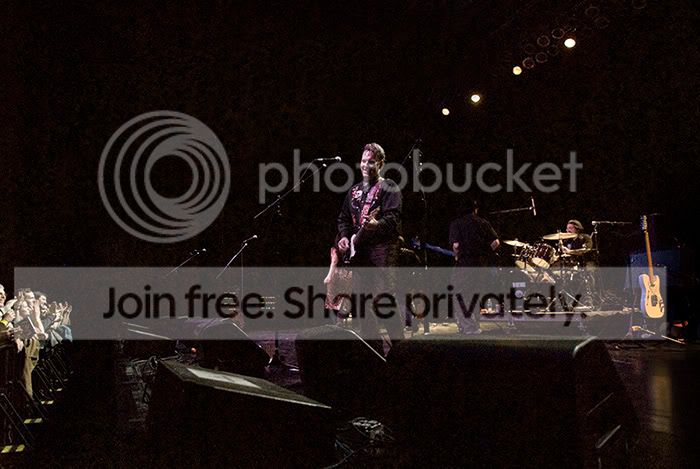
I love high speed sync but love to mix strobe with hot lights as well, sure is a different beast but what amazing additional control that is does offer. I know this isn’t shooting into the sun but Morsie titled this “Shooting into the light”. 🙂 This is an outtake from and assignment at the National Theater. I am not a concert photographer but when asked and my scheduled allowed, I was a bit excited about shooting in the discipline that our man David Anderson has mastered. Can’t use flash so it was all about trying to get in sync with the lighting engineer and forecasting the sequence that he/she may execute next.

 Ben CochranMember
This is a subject that can be very complicated, as there is so much involved with monitors, I will try to keep this simple though. The size of the monitor has no bearing on how well it will reproduce the colors, there are many other specs that determine this but the most important will be the total size of gamut that it will render. If your monitors do not cover the same gamut then they will never match up perfectly, you want to use the monitor with the widest gamut as your base line.
Just a little bit about monitor gamut: There are a lot of brands that now reproduce 92-95% of the RGB gamut at very affordable prices, most are actually manufactured by a very few manufacturers and then relabeled. Currently, a large amount of LCD users are using monitors that cover 75% of the RGB gamut and they are actually fine for most work. The problem is; a wider gamut image may look terrible on a narrower gamut monitor and a narrow gamut image may look terrible on a wider gamut monitor. The 92-95% gamut monitors have really come down in price and you can get them from the $600.00 range and up. The big plus about purchasing a 92-95% gamut is the fact that the user may never need to upgrade as the next level is mostly in the 125% range and one would only need that for high end fashion photography and graphic design. The newer Apple Cinema, Lacie 300 series, Samsung, LGE, NEC and so forth have very affordable monitors in the 92-95% range and are perfect for high quality professional work as well as amateur/recreational users. A 75% gamut works fine as well but a wider gamut sure does provide a lot more security as well as efficiency, when it comes time to color duplication and printing.
I second the Eye One 2 but remember that you may need to build 2 separate ICC profiles, one for each of your monitors.
Ben CochranMemberHad a photograph taken and planned to be used in publication, without my permission, too. It is amazing how many publishers, in some countries, do not care about where the photographs came from or about copyright infringements.
Seems that many believe that the internet is 100% public domain and that all images posted on the net are also 100% public domain. This guy takes it to a new extreme though but it does illustrate the mindset of some. http://www.shapelessmass.com/index.html/?p=578
Ben CochranMemberHey Matt, I am not sure but I think that I may know you from the Smith River, a few years back. Anyway, I have the perfect solution for you: Purchase a tripod that will support your camera and lens. As far as the SB 600, don’t worry about it as one in perfect condition, with original boxes and documents, will be mailed to you next week. For free!! 🙂
I don’t use it often and only have it as a backup to all of my other hotshoe strobes. I kind of need to make room in the hotshoe case and I would rather you have this one for your childs first birthday photo’s. If you are the same Matt, that I am thinking about, I know that your father, mother and uncle will love getting slammed with daily photograph’s :).
Email me your address and I will send it next week, I have a location assignment in Atlanta this weekend and may need it, doubt it but want to take it until I replace it. I shoot fast and furious and the recycle time is just to slow, compared to the other strobes so, enjoy it. 🙂
Ben CochranMemberJason, those are some great shots on that web site. I really love your buddies perspective and ideas for composition. His photographs are very well executed and, IMO, some of the very best fly fishing photographs that I have seen!
Ben CochranMemberI knew those don’t sting, I was referring to that quick sporadic nature, that you mentioned. Love that one winged flying bandit in your last shot. pretty cool actually! 🙂
Ben CochranMemberCan’t add anything more to what has been shared so.. Very nice photographs and the pictorial story line is very well executed!
Ben CochranMemberVery nice Lee, some very nice looking browns. Kind of makes me sick, in an odd feel good sort of way :).
Ben CochranMemberMatt, for mid-day hot sun, you did a very good job! With the speed of those little rascals, being able to zoom in and out is a major plus. I fear for you trying to get close to those fast rascals with a fixed macro lens :).
Ben CochranMemberThanks everyone. I must say that I truly admire Neal for his dedication to wanting to share information and his desire of helping others. I know it takes a good bit of time for him and he expects nothing back in return, he just enjoys sharing. in hopes that it is helping someone: That makes him tops in my book :).
Hey David and thanks to you as well 🙂 Yes, many of those are classic Carry Stevens patterns, the rest are tied in the classic Catskill style.
Bob is truly an amazing tyer, as well he has been awarded a slew of international gold medals from major fly tying competitions. He was also awarded “Most Innovative Fly of the Year” by Fly Tying Mag a few years ago but it is his passion that makes him ty first.
It kills me as I have never seen fly’s tyed with such accuracy that they can be called sterile. as his works.
I cropped the close up, of this one fly, to better illustrate the detail that he puts into each fly. Each of the fly shots are uncroped and print 100% @ 18″. Talk about in my face :).
Neal has also posted the remainder of the 16 uncroped individual fly photographs.

 Ben CochranMember
Yes, some very good shots there Erik, well done!! looks like you had a great time as well.
-
AuthorPosts