






Ben Cochran

Forum Replies Created
-
AuthorPosts
-
 Ben CochranMember
Hey Brett, can you help me out with your shots and setup’s? I am normally really good at dissecting lighting and for the life of me, I am trying to see how your only lights were set at camera right and camera left. If you don’t mind, I am interested in how you got your specular from above and from behind. I have been doing this for a very long time and I do now how to get this type of specular and how to place and set shadow density but that would be with either bounce, flags or extra lights, just curious how you did it with just two softbox’s? Also, trying to understand the shadow density in your shots, did you suspend these or replace the background’s? Reason why I ask is because I noticed that there is shadow density where there would normally be bounce specular. Like I said, great shots but I am trying to figure out why the shadow density and specular density aren’t behaving naturally. Thanks for any input…
Ben CochranMemberThanks Bret, you just freed my weekend up lol. GREAT shots, by the way! I don’t think Zack has the softboxes, but I have some DIY ideas that I hope to work on this weekend. You did a great job on your postproduction work, as well. 🙂
Ben CochranMemberHey Zack, I was mapping out some lighting scenarios and then remembered that a very good friend of mine did a great write up, of a single source lighting solution, for Westcott. I think that you may really like this, as the dark field lighting scenario only requires one light source but you can then add some front fill, if desired. Granted, this is what would be defined as “low key’ lighting but it works out great for commercial advertising product photography. You can also change the two front flags with white cards and bounce some light back onto your subject, as well.
As far as the primary lightsource, remember that the light source is always the last place that the light comes from. In this case, hang your white sheet behind the set, as if it is a scrim. Then shoot the D600, with the diffuser dome on, through the white sheet and into your set. Same thing as I mentioned above; make sure that you have your subject on a harder surface. If you want the elevated floating look, have your camera set below the mid point of your object. For floating below; slightly above mid point and turn your object slightly tilted away and turned to the side. For catalog product shot; mid point and change the lighting solution to promote slight shadow, will require heavily diffused light from above the object; I will try to shoot this one over the weekend for ya and make it high key. 🙂
Scott is a very good friend of mine, PS and lighting author as well as one of my moderators over at the NAPP, here is the link to the article that I mentioned above, hope it gives you some good ideas. 🙂 http://fjwestcott.com/photo-lighting-tips/quick-tips/tog-tuesday-dark-field-imaging
-
This reply was modified 13 years, 3 months ago by
 Ben Cochran.
-
This reply was modified 13 years, 3 months ago by Ben Cochran.
-
This reply was modified 13 years, 3 months ago by Ben Cochran.
Ben CochranMemberI will try and set something up over the weekend and keep it limited to two hotshoes. Along with what David mentioned, I have known some to actually use a softbox as a platform and shoot up into it, casting diffused light up onto the above object. Scott Kelby will sometimes use a very large softbox, as a background, for high key shots, as well.
Nonetheless, if you do want some shadows, it is best to use a hard flat surface; this will prevent your object from sinking down into it, obscuring portions of it. I will shoot something over the weekend and then write up some thoughts and techniques, keeping in mind that everything is based on the use of just two speedlights and option of on camera flash.
P.S. Gretchen is going to love living in my home. lol
-
This reply was modified 13 years, 3 months ago by Ben Cochran.
-
This reply was modified 13 years, 3 months ago by Ben Cochran.
Ben CochranMemberWOW Zack, he or she is absolutely precious! Love the look, kind of like “You had better make me look good, bub!” lol
You know, I think that a huge part of the fun and satisfaction, in this discipline of photography, is making the unbelievable believable. This and nailing it is kind of the Holy Grail, in and of itself. Of course, I say this just because I don’t want it to be so easy that anyone and everyone can do it. 🙂
There are numerous ways that this type of photography can be shot, then polished in postproduction but writing out how I would set it up would be a waist of your time. As I have enough strobe lights to make a blind man see. What I can do is, limit the setup to the amount of lights as that of your setup. Or, we can just set this up as a challenge to everyone that wants to get into this and establish the restriction on the amount of and type of lights. Nonetheless, give me an idea of how many lights and I will effect a set with the same type of objects, then share the image and lighting arrangement. I am guessing that you are going for that catalog product shot and not something more commercial or fashion illustrative.
In the mean time: Can I have that precious dog? 🙂
Ben CochranMemberHow are you erasing the shadow,in your third shot? I might suggest a duplicate layer of your base shot and then clone the background over the perimeter of your flybox. Duplicate the base layer again and place it over the cloned background layer. Set this new layer with a mask and paint the shadow away. When you get close to the edge of the flybox, use a very small brush and set the strength to a soft edge, which feathers closer to the actual edges that do not require masking away. With the background cloned layer underneath this layer, the natural background will appear with no shadows and better present the illusion of floating.
Hope this helps and that I explained it well.
Ben CochranMemberHey Zack, on your first shot: Try to not shoot down on your subject, as it kind of pushes the object down and gives it a feeling of being supported. Also, try to bounce a bit more light onto the front and, if the shot allows, try to not shoot it so fat and turn it just a little. Play with the handle a bit and find a better placement for it, perhaps down lower.
In your second shot: Remove the shadows in post and I would probably try to get all of the tools set to the same angle. I would set them at an angle that delivers the best specular and unlike the same as above, I might try some angles from above the subject. Like your tool cradle too! 🙂
Hope that helps some and if I get some time, I will set up my gear and do some shots, to help better illustrate what I mean. Do you have to use a white background?
Ben CochranMemberHey David, With all of the IQ tests, scattered all over the internet, I can see that you must have scored very high, welcome back to the Nikon family. lol I am sure that you noticed, on the cover of the manual, it states: For IQ’s 160 and above so, well done ya Mensa freak ya… 🙂
Before anyone jumps on that, I am just kidding around and having a bit of camera wars fun. 🙂
David, the 105 is one of my favorite lens and a true go to for assignment work. Also, you would love the new 70-200 and the 24-70,both are excellent glass and my other 2 most used lenses.
I can’t share any personal experiences with the 14-24, as I am not a wide kind of guy. Not a big fan of the 85 1.2 and with your wider sensor, not sure that you may want that shallow of a DOF; so limited on your distance to subject and I feel that the 70-200 at 85mm 2.8 serves excellent. You may want to look at one of the older 80-400 mm lenses. Regardless of what a lot of recreational shooters reviewed, the lens is actually a very good lens and I have used it , @300mm, on fashion shoots. You may also want to look at the 50mm 1.4, I don’t use it but there is a time and place for it and if you like those expansion “life style” shots, it is a great choice.
Hope this helps
-
This reply was modified 13 years, 4 months ago by Ben Cochran.
Ben CochranMemberThe reason for wanting to stay with the DX is that I already own two DX lenses. I am not familiar with the full frame format and do not know the pros and cons of that. Understand that the 7100 will be an upgrade from the D70s, so, wow, what a jump eh? Still doing some research and trying to make the right decision. Thanks again!
Mike, please don’t allow yourself to get caught up into thinking of full frame as an upgrade or any sensor sized sensor as an upgrade to a smaller. The DX sensor is placed into a professional body for a reason, the same as the full size sensor = they are professional tools that serve a specific need.
Truth of the matter: The Con’s of one sized sensor are the Pro’s of another sized sensor. The main character traits, that differ in the two sized sensors, are: Field of View and DOF. For wide shots, the full frame sensor, especially a medium format sensor, are the better tools. For reach, the DX sensor functions better. Between the two cameras, you will find a variance in the hyperfocal distance, as well as the mentioned DOF. One of my considerations, in which tool to use, has always been my distance to subject and desired DOF. When I use the term DOF, I am referring to the desired focus zone and placement of same.
These are the major considerations in choosing which sensor size to use, as a proactive tool. They all serve as tools in a professional setting, as a carpenter might say “One sized hammer will NOT do all things equally, the correct hammer to reach the desired results for a specific job.” The image quality is equal between the mentioned sized sensors, the art and beauty of the shot
Ben CochranMemberThanks for that feedback Matt. the D200 is still a good outfit but as you noted, it really was still in the infancy phase of Nikon Digital. 🙂
Hey John, yep, decided to pop my head up above the ground again and great seeing you here! 🙂 Not to hijack this thread but I had some curiosities with your new system. I do agree, with you, about the PW systems and that is the reason why I went with RP and modified them. Even though they do have full TTL and CLS functionality, I have never had them out of manual mode and don’t think that I will. I do couple the transmitters with Nikon SU800’s and this allows me to control 3 groups and 4 channels per SU800, while converting the IR to radio and then back to IR on each unit: THEY WORK GREAT (VERY RELIABLE!), shoot through anything and distance has been no issue. Given the fact that I have 8 RP PX units, don’t think I will be straying away from them for a while. 😉 Also, I am able to still use the IR by shooting over the the top of the transmitter window and, effectively, send IR and R frequencies down range, simultaneously.
I am curious about your 600 RT: You mentioned “5 groups of up to fifteen”. I am concluding that this means groups of “A” – “E”, is this correct? Also, does it only support up to 15 units, is that what that means or is that 15 channels?
Ben CochranMemberOutstanding and very impressive work, Chad!!!! I don’t know what it is about me, I love watching video’s but lack the desire to take it up. With the growth in that sector and my access to an endless supply of professional instructors and material, I know I may need to reevaluate my position and find the inspiration to do so. Nonetheless, very impressed with the entirety of your work! 🙂
Ben CochranMemberHaven’t posted here in a good while but I think I may have read something that compels me to do so… 🙂 I could swear that I read something where my ole pal David Anderson came over to the dark side and is now a Nikon convert? I may need to take a long nap and when I awaken, come back to see if I actually made this post and did, in fact, read this revelation… 😀 😉 ;D David, welcome to the dark side and will the last Canon user please bring the flag upon your arrival. LOL
Agree with everyone about how the image quality is equal but speaking for myself, I really prefer the functionality built into the design and layout of the Nikon pro bodies. This and I have to stand by my belief in the Nikon CLS and flexibility/reliability of the nikon strobes. On the same note, it really is what each person is accustomed too and the in depth relationship that they have in both working knowledge and purposeful application of their equipment.
Congratulations Matt and would love to hear and see more of your impressions, with your new camera. 🙂
Ben CochranMemberLove that Jay!!!! I don’t specialize in Wild Life Photography but here are some recreational shots slow shutter speed. Very limited post work so, overlook the potential quality.
Most were shot at 200m, one at 300mm.


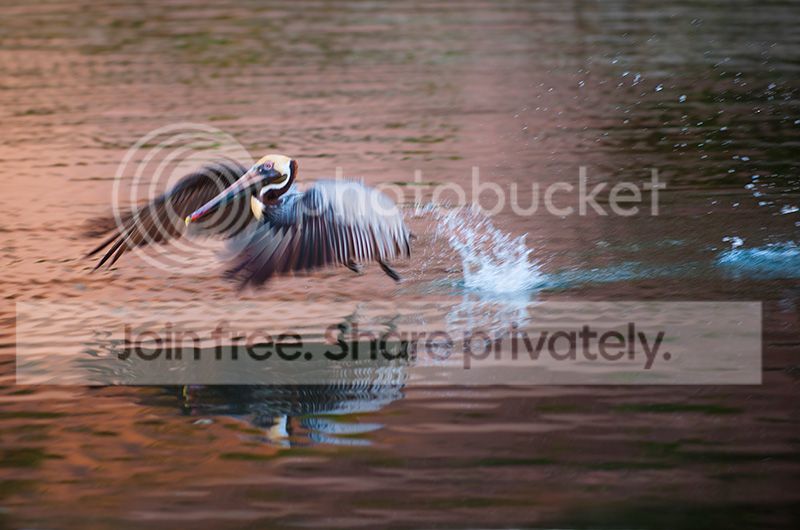
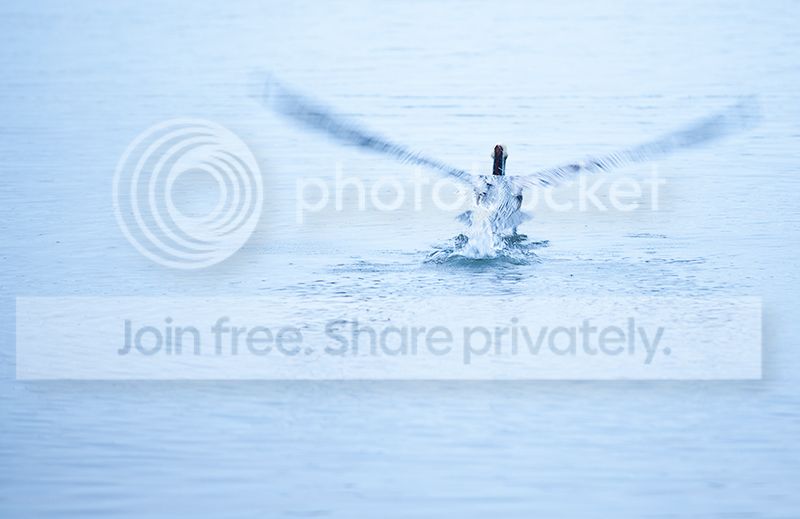

These aren’t slow shutter speed but were recently shot at 400mm
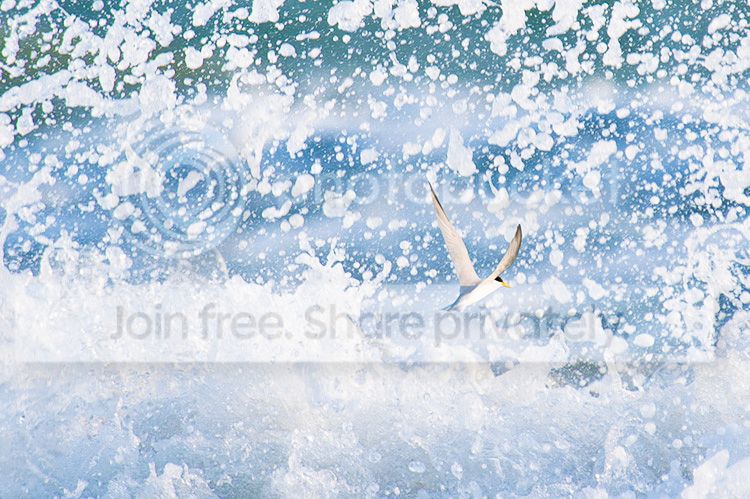



And finally at 200mm

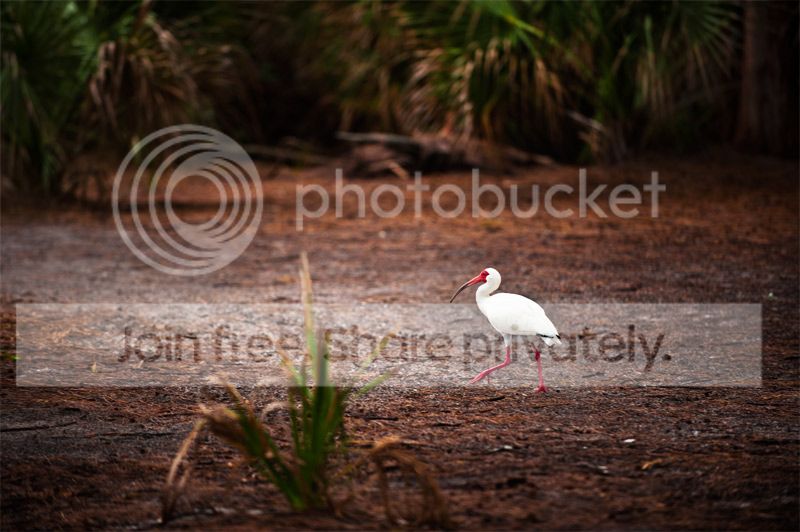
Yep, I love being out in the densely forested wilderness. ;D As Steven Tyler says: “Walk this way” 😀
 Ben CochranMember
Keep in mind that not all lenses have to be new, in order to be a great lens. At these distances, you may find that you want to manual focus anyway and there sure are some amazing old school lenses in the secondary market, that are very inexpensive!
Also, do yourself a favor and don’t freeze every shot, a little motion blur can be a lot of fun and bring life to your subject’s. 🙂 As always, if the subject is to far out of reach, you may be to far away from it ;).
Ben CochranMemberI have a friend, in Geneva Switzerland, who works for a company that came up with this sort of software. In essence, the camera shoots at a hyper-focal distance and the software brings the chosen subject into focus, while lens correcting the rest for bokeh, if/as desired.
For myself, I hope that it never leaps above the P&S sector and stays out of the DSLR’s. Guess I am just an old school, get it right in camera, forget about all of the plugins, sort of guy. 😉
Ben CochranMemberNikon has announced that they are going to keep building the D700, as the D800 is not intended as its replacement and is not suppose to be considered as one. Great news, actually, 2 completely different cameras that serve 2 different disciplines amazingly well.
Ben CochranMemberI second Neal in agreeing that it is nice to hear from you again. In case you may have missed me any, lets pick up where we left off… ;D
I have the perfect camera body, one that prefers the mucking for around, my old D700. It is rugged, weather sealed and once I receive your 2 grand—- You can drop it and I’ll make sure to laught it off ;D. Other than this, I got nothing but “good to see ya’s” for offer…. 🙂
Ben CochranMemberDarn, I’m chiming in late again… Oh well, the D200 is a great system and very rugged, I have no doubt that you will love that body.
Had I chimed in earlier I would have suggested a nice little Hasselblad H4D, for ya; It insurers well and when the rip tide races by, snatching it from your grasp, it can almost float………………
Ben CochranMemberI would never suggest, to anyone, that the D200 is a justifiable upgrade from the D80. They both have the same sensor with the D200 having a few more bells and whistles, along with weather sealing and much more durable body.
At least with the D300 you have a better sensor and a far better reduction of digital noise. The D300 is a better upgrade choice compared to both the D80 and D200 with many improvements.
Many D300s shooters are actually converting over to the less expensive D7000 for several reasons, due to this, the price of used D300s are extremely low and some great deals can be had.
The D7000 does have some great qualities about it but keep in mind that it is built for the consumer market, as opposed to the better quality of the body in both your choices of the D200 and D300 prosumer market.
The first question that you must ask yourself is: “Why do I want to upgrade my camera body and will a body upgrade meet that need?”
Ben CochranMemberThat is AWESOME Neal!! I know for a fact that the attendees are going to walk away with a tremendous wealth of information!
-
This reply was modified 13 years, 3 months ago by
-
AuthorPosts