






Ben Cochran
Forum Replies Created
-
AuthorPosts
-
 Ben CochranMember
Hey Dusty,
1.
Ben CochranMemberMatt, I am a huge fan of properly executed B&W shots, I absolutely love your first shot!!!!! Many will try for the extra crisp sharpness but I am a huge fan of an artistic blur and yours is great, in that shot.
When you get into learning some post software, do yourself a favor and not let technical skill advancements take away your present artistic flare from delivering some “GREAT” B&W photographs
Ben CochranMemberDusty, it is a lot more complicated than this but in an effort to describe Kelvin, I will submit this. Our eyes and the camera sensor do not see objects as much as we receive measured frequencies that define the depth and color of objects. All of these frequencies are really bounced frequencies (colors) that are affected by the Kelvin (hue) of the light sources. Our eyes do an amazing job of adjusting for multiple Kelvin’s at one time but the camera sensor can only adjust for one Kelvin at a time. The Kelvin (hue) is determined by the temperature of the light source as variable heat ranges give off different frequencies (color). The object, with a camera sensor is to try and match the Kelvin of the light source so that your final shot does not have a competing Kevin, with what you set in camera, this is the WB process.
Keep in mind that WB is not mandatory! As you get a better understanding of Kelvin and frequency grids, you may want to purposely set your camera to a competing frequency to better attenuate or amplify competing Kelvin’s. I posted this shot to show what I am talking about. I think I may have posted this before but I shot this on tungsten so that I could amplify the competiting Kelvin’s. A little happy add here: I sold this to authorized Adobe Training Center, hanging in the class room to illustrate the effects of Kelvin and how to compose it; a good little happy feeling as I am a huge Adobe fan :).
 Ben CochranMember
Joel, I hope you have a great time down there!!!
First question you should ask yourself: Why rent a lens that you may fall in love with and then end up having to pay even more to purchase it? We, as men, know how we are
Ben CochranMemberGreat shots and lighting Will ! i do agree with Zack about the blur, the DOF kind of confuses me as it appears that some items would of been in the same DOF yet, they are blurred ? As always though, love your photography and lighting!
I saw this somewhere, a photographer took an old backpack apart and used the metal frame as a mounting platform. What he did was, attached some additional adjustable poles and mounted the strobes, reflectors and umbrellas on them and then put the backpack frame on. This allowed him more dynamic lighting, while keeping his hands free…
Ben CochranMemberIn that case and dependent upon the amount of sunlight that comes in through the door, you may not need any strobes at all. How much direct sunlight comes in through the glass? Also, more than likely you will have to use early or late direct sun angle and this kelvin will probably not blend well with your interior light. No problem as you can use a reflector for bounce, this will serve as an additional light source.
What you can do is: Lay the baby so that the feet are towards the door and head away (90 degree angle with the door). Tape a white sheet on the glass, just high enough to diffuse only the light that would hit the baby and then place a reflector in the overhead position (butterfly position), make sure that the light that hits the reflector is not part of the diffused light as it will diffuse on the bounce (This will allow the reflected light to serve more as a primary) Set your camera near the glass but slightly off to the side so that you do not block the light source or cast shadows onto your subject.
For testing: Try placing a pillow or baby doll (as has been mentioned) there, with a non white pillow case, and test shoot through out the available sun cast time frame. This should help you schedule the best possible time and light for the actual shot.
If you are up to it, do a test shot with the pillow and we can help better map it out for you.
Ben CochranMemberHey Dusty,
Honestly, before considering what you need for the shot, you really should try and map out the composition that you want first. Without that, you really don’t know what you may or may not need to get the desired lighting effect. As David mentioned above, white foam board is great and if used properly, it can give the effect of several additional strobes. (Lovely shots, by-the-way, David !)
Also of importance, what type of environment do you plan on shooting your photographs in, one must consider the Kelvin of competing ambient? One must also use extreme caution in the butterfly placement as it can cast some very unpleasant, intense and ugly shadows into the character of your subject, reflectors or additional strobe’s, to counter balance, are almost always mandatory. It can yield some nice results though…
Map out what type of composition you want and perhaps we can then toss out some potential lighting blue prints for you. Have fun with it, it truly is the most enjoyable part of photography IMHO 🙂
Ben CochranMemberI also am not a fan of the majority of HDR images but I do like your second image. Most HRD really is way over baked and looks nothing like a photograph, as much as it appears more like digital art. I also agree 100% in learning the discipline of photography as so much more is gained with the disciplines of getting the shot correct in body.
HDR, Tone Mapping or Exposure blending does have its place though. HDR really has not been defined properly as some consider it a process that must have a + – 6 stop variance from mid the mid range image. Tone mapping is very similar, with out the stop range, but can be performed with a min of 2 photographs, the same with exposure blending. The application for these are best used when the limits of a sensor are reached, any thing other is a handicap in not trying to maximize the potential of a cameras sensor capabilities. Properly tone mapped images and/or exposure blending the images can lead to very impressive photo realistic images and come far closer to delivering what the eye actually saw.
Still though, I do like your second shot but it seems to be overly sharp, did you use a high pass filter on it? The composition is really cool— good eye!!
Ben CochranMemberThe discipline required in mapping out the shot first, acquired knowledge and application of this knowledge, the understanding of light shaping with highly technical preplanning, the proper use of strobes and understanding how to best use them… I LOVE the dark shot!!!!!
The Man Cave (MC Studio 🙂 ) has become a higher end technical facility :).
Ben CochranMemberAfter the debacle with Digital Rail Road and the fact that they only gave a one day 10 hours notice for members to retrieve their personal archives, overlooking the fact that some pro’s were on assignments and away form the internet; I would never use an online storage service! What made this so bad is the fact that their was no warning, just a notice for those that logged in that day with a message giving them 10 hours to retrieve.
Multiple HDD’s, either manually mirrored or automated, is the best option. if one questions that amount of hassle or time involved, they must question the real importance of the shots.
For myself, I have multiple clones of each archive. Extreme paranoia, perhaps, but I made the mistake of migrating to temporarily open up short term storage, while on assignment. As luck would have it… The non-cloned hdd crashed during my return. Bad clusters prevented any recovery of aprox. 300GB in photography on it >:(.
Better to be extremely safe as opposed to extremely sorry…
Ben CochranMember(Deleted by poster, no need to have the repaired image posted while current legal proceedings are underway)
Steve, glad they caught the culprits. Also, I used CS3 for the repair through a sampling approach, it is the most common method.
Ben CochranMemberEmail me the second one at the email in my profile and I will be happy to process it. I did some Federal law enforcement and the first shot will serve no purpose at all. Did you happen to shoot the license plat… guess not 🙂 I can process the first one good enough for you to hit some year books but it will probably not stand up in court so, go for the confession…
Ben CochranMemberHere ya go… I only spent a short bit of time on these but I hope you see what I am talking about.


 Ben CochranMember
I hate it, hate it, hate it!!! The 900 is far to automated and has many features that take away artistic control, it is more dedicated to benefit the beginner that does not want to invest time in learning. The 900 has many features that I would also have to pay for and would never use and turn off. The 800 was still out selling the 900 with a higher demand on the 800, they got rid of the 900’s primary competition… >:(
As for me and the advise that offer to everyone now. The SB800 sucks and that is the reason that they discontinued them. Please spread the word on how bad the SB800 was and I will keep my hopeful eye on some great used ebay SB800 auctions 😉
Ben CochranMemberI am not one for processing an image in order to save it as much as I like it a lot more when the photographer maps everything out, prior to the shot. Having said that, IMHO, blur works out best with B&W as it can add a very dramatic artistic impact to the image. I feel that different crops would also add a tremendous amount of additional effect to these shots and you may end up with some really cool shots.
If it is ok with you, I would be more than happy to do a little post edit and repost your exact same shots with a different crop and perhaps conversion, to better illustrate what I am talking about and with your permission…
Ben CochranMemberMy favorite accessory would have to be…. A smart English speaking assistant with accurate hearing… [ch9786]
Diddo on off camera hot shoe flash and the cord as well. I also use the cord for a better line of site with the SU800 to SB800’s, for wireless remote. Works out great in reducing the bulk of equipment/strobes required, in remote location shoots.
Ben CochranMemberMichael, just like with your scientific equipment, you really need to become more intimate with knowing your equipment and how it works. The absolute best way to expedite the learning curve is to set EVERYTHING to manual. This will force you to learn how to use it properly and prevent that point of stalemated growth in your advancement; it is also a great way to take advantage of your analytical skills.
The other thing is to study, with an analytical focus, art works; not just photographs. Knowledgeable and accurate critique is another terrific tool that everyone needs, no matter how advanced they may be. Once you learn to do everything in manual, including Kelvin adjustment for WB, you can then use the automated functions for better use in an application that you fully understand better.
Shoot everything and shoot often, change the settings then study only the photographs that you liked( Including the metadata for these shots). This will help you develop that mental database for your own style and approach. Also, study those best images and ask for critique on what you can do to make them better and explain what you wanted them to look like.
Study your images for best crop and store that into your mental library, this will help with future framing. Study the shots and analyze where the best real composition is and what/why other artifacts distract from it, then go back and reshoot the shot with better framing/settings and compare to the original. Keep doing this until you get it right for your taste.
If you really want to advance in your ability to both develop great composition with natural lighting. Use one single empty chair and practice with your angles, framing, settings and natural lighting, until you find the spot where everything falls into place. Your goal is to give the final image the feel that a person is in the frame or just left it; only not seen physically in the composition. Composition is all about conveying emotional thought.
Ben CochranMemberIf it was me and that $800.00 was burning that hot, I would first have to measure the benefit of the 2 options. If you are not doing larger prints, the increase MP isn’t really gong to be of a greater benefit to you. The 18-200 is a good lens but it also is not the best, VR isn’t really as great as it may sound either. So, I don’t really see a great reward for either of these options and spending $800.00 just to get rid of 1 lens does not fall into the best example of benefit.
Perhaps taking some of the $800.00 and investing in a descent tripod so that low light is even better for you and placing the remainder into a glass of water, to keep it cool for awhile
Ben CochranMemberNumber two, are you the one who’s been sending all those emails with this title to my spam filter?
ZachThat was funny ;D
Love the shot John! I am not a big fan of typical fill flash but I am a big fan of proper use of fill flash; this makes me a big fan of this shot, John. Cool meter for the strobe compensation effect my friend!
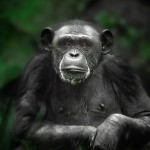
Those eyes are seriously intense and wold probably scare the heck out of me if I found them looking at me through the camera frame 😀 ;D
Ben CochranMemberAm I the only one who noticed he’s not wearing shoes in Iowa in winter ? 😮 😀
LOL Nope sir… How-ever, you may be the only one that thought no one else noticed it ;D ;D
-
AuthorPosts