






Budget portrait studio for a noob
Blog › Forums › Photography › Budget portrait studio for a noob
- This topic has 38 replies, 13 voices, and was last updated Apr 15, 2009 at 7:53 pm by
dsflyman.
-
AuthorPosts
-
Feb 11, 2009 at 4:08 am #67235
dusty montgomery
MemberBen,
1. Where do you live?
2. How much would you charge for one week of intensive training?
3. What books should I be memorizing?
4. What absolute necessity pieces of gear should I have?As for the rest, I need to employ some google and other resources before I respond in kind to this post. But I love it as you are bringing new terminology and thoughts to my plate.
Many thanks,
DustyFeb 11, 2009 at 4:52 am #67236 Ben CochranMember
Hey Dusty,
1.
Feb 11, 2009 at 5:48 am #67237Ben CochranMemberI almost forgot, I wanted to add this for you to help simplify the study process:
Kelvin is measured in the heat temperature as the temperature gives off a frequency of color. The lower the number, the warmer the color (yellow’s and red’s). The higher the Kelvin number, the colder the color (blue’s). The midday sunlight is considered the base line and it can be measured at around 5500 K and 6000 K. Granted the suns surface is considered 6500 K but by the time it is diffused through the ozone, it generally hits the earth midday at 5500 K. (Caveat: I say warmer for the yellows and reds and colder for the higher kelvin of blue, due to the fact that we associate yellows as warm and blues as cold: the opposite is more true when we talk about actual temperature. Don’t let this confuse you though. )
One additional add and a very important one: The azimuth or relationship to the sun and location on earth will also have an affect on the midday Kelvin. One cannot travel long distances and expect the same kelvin in different hemispheres. The midday Kelvin in Morocco is not the same as it is in Siberia and will not be the same in the southern Gobi. The same will be noticed south of the equator. Topography, season and environmental elements will also effect both Kelvin and hue, through bounce, refraction and reflection. Humidity levels will also have an effect when it comes to adjusting for WB.
As an additional study tool; physics and geometry is invaluable when it comes to using strobes and creative lighting technique. This is the reason why I cannot point you to any one book.
Hope this encourages you as photography really has a lot more to teach than just pointing a camera and saying, smile :). The real joy is when acquired knowledge all comes together, in a shoot, and you nail it!!
Feb 11, 2009 at 9:48 am #67238al mcb
MemberI was typing a reply …but deleted it just to say that I like DA’s approach
so with that
Natural light 100mm macro at my front door …….
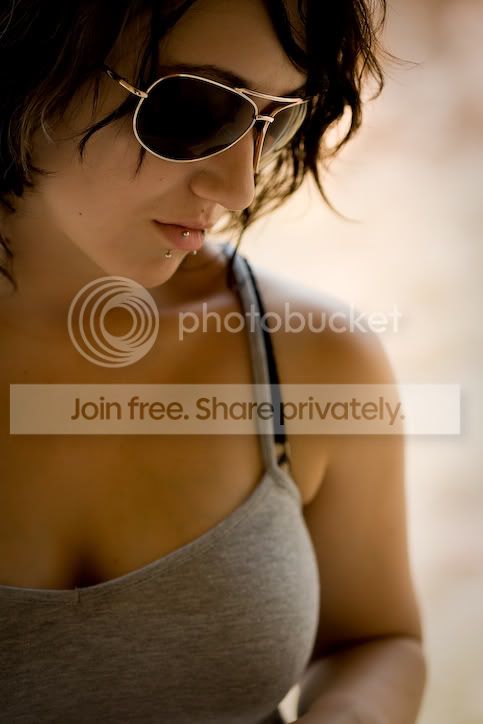
AL
Feb 11, 2009 at 11:01 am #67239 David AndersonMember
Nice shot McB – great backlight.
At the risk of being called a poof, I should point out that her hair is under the arm of her sunnies..
(look up guys ;))
www.dsaphoto.com
A picture is thousand words that takes less than a second while a thousand words is a picture that takes a month.
Feb 11, 2009 at 6:57 pm #67240MemberBen,
First let me start by expressing my condolences for such a recent run of bad luck. Here’s to hoping it turns better very soon.As for the info. you are providing-wow! I certainly have some studying ahead of me. This advice is solid, and much appreciated. Last night I tried taking some practice shots of my black dog, but it was not working out. I realize now you are right about owning ever piece of info in the manual.
I need to re-read this thread, a few times likely, and do some research, at which time I will try some shots, and we’ll see what comes out!
Thanks guys!
DustyFeb 11, 2009 at 7:27 pm #67241Neal Osborn
MemberDusty – Ben will work you my friend. First thing he taught me was to take the camera OFF AUTO mode and learn to shoot ONLY in MANUAL (for everything including white balance). It is great advice! Without that discipline I would never understand Kelvin, metering and white balance the way I do now. Notice how my recent fly pics have great color and make you wonder “how?”. That is full throttle manual. Get to know your camera like your fly rod. My wife always asks me, “how did you know to do that” when taking pictures. The answer is simple, I know because I’ve done it a hundred times and when where and why to change a setting. Auto settings can be great but only after you understand when to use them and when to tweak or flat out override. For example, kid shots probably need auto mode because of the tempo of action but if you know how to shoot manual then you will know how to adjust the auto settings in a flash and get better pictures faster without being a Griswald.
I’m still learning myself!!!
If I may . . . go to the library and spend about 1-2 hours just reading some introductory art books. Get a certain picture in your mind’s eye that you want to capture and then spend the next two weeks focusing on nothing else but that picture. Shoot as many shots as necessary until you get close then ask what you could do better. Each variable plays a part in getting the final shot. At least that’s what I did and why I have focused only on macro photography for the past year. In fact, most of the good shots recently are simple recreations from art books like chapter 1 or 2 on “the basics of lighting”. Simple really is better in most situations – trick is learning your darn camera and how to make the complex look basic. Now I’m starting to understand competing Kelvin and foreground vs background lighting and that is like going from an 8-box to a 64-box of Crayons. The more advanced skills translate to artistic expression. Unfortunately my outdoor shooting skills are greatly lacking but with the knowledge I’ve learned so far it will be much easier to cross over.
It’s like fly fishing, learn about loading a rod before understanding why you like a rod. And be very careful about what you read on the internet – most people are posers and just regurgitate stuff they read from someone else (or they copy other people’s style to perfection but don’t know how to cross over when the variables are changed). This board is a blessing because there are so many professionals in different areas willing to openly help a guy out.
Feb 11, 2009 at 7:59 pm #67242MemberAl, I love that picture.
Feb 11, 2009 at 8:17 pm #67243 Chad SimcoxMember
It sounds like natural light may be out of the question for you. But with a fast lens, don’t underestimate what you can do with just a little window light. Maybe use some duvetyne for a backdrop to help provide some contrast/separation under flat lighting conditions.
I’d consider picking up a small on camera style strobe. I use Sunpak 383s, but those are now discontinued. Maybe check on Vivitar 285 flashes, or see what you can find locally. You can use them off camera with a PC Sync chord (I assume your camera has that option) and fire them into an umbrella to soften the light. Foamcore is a great option for bouncing the light off of to soften it, and you can pick it up pretty cheap at craft stores. If the walls in your place are light, you can always bounce the light off the wall to soften it as well. Just be aware that any color on the wall will have some effect on the color of the light. If you plan on shooting or processing for black and white, this shouldn’t be a problem. For simplicity when shooting in tight spaces, I prefer to keep the flash on camera and bounce the light off a wall if possible.http://society6.com/grainfarmer Fly Fishing and Landscape open edition Photography prints.
http://grainfarmer.vsco.co/ iPhone photos
http://instagram.com/chad_simcox InstagramFeb 12, 2009 at 1:48 am #67244MemberI’d consider picking up a small on camera style strobe.
Chad,
Please forgive the ignorance, but would the 430 EX or 580 EX flashes serve the same purpose? Is there a true difference between a strobe and a flash? I think the 430 runs about $280 or so; are strobes a cheaper way to go, or do strobes simply offer better indoor lighting?
Still working my way through the nomenclature :-[
Thanks for your help Chad!Dusty
Feb 12, 2009 at 2:30 am #67245MemberThats ok dave ….we know you like your sunnies and the gayer the beter but at the risk of been slapped in the back of the head I was going to say ..”at least she has hair” but i wont coz that’s just cruel :-X ;D ….I did see that in postP …but that what sets the pro from amateurs apart ……ie spotting these things at the shot
Feb 14, 2009 at 5:27 am #67246Ben CochranMemberVery nice shot Al, I like it a lot!!
Dusty, part of using light is learning how to control it. As David Anderson stated, keep it simple or at least try to keep it so that it appears simple. Part of controlling light incorporates the process of redirecting it, shaping it and controlling the intensity of it.
A lot of the so called secrets are solutions that are so simple they are sick. Not really a secret as much as it is just a simple tool for redirecting light. I thought that I would toss the solution your way: Due to the fact that you do not get direct sunlight through the door, use a large mirror and place it in an unencumbered spot outside of the door. You can now redirect the sunlight through the door and aim it at your bounce boards. I like Davids suggestion of tracing paper diffusion and you can even overlap them to give a nice window grid pattern, just make sure that the lines compliment the subject and do not distract from it. Adjust your bounce cards for better lines between the darks and hot spots while paying very close attention to how you position the shading on the face and body.
Feb 15, 2009 at 8:50 pm #67247Chad SimcoxMemberDusty, the 430 and 580 are exactly the type of strobes or flashes I was referring to. Strobes and flashes are synonymous.
I’d go with cheaper units than the Canon ones. Shop around and read reviews of ones you find. Like I said, I use Sunpak 383s, but they are no longer being produced. Maybe the Vivitar 285HV unit would be a good one to start out with.http://society6.com/grainfarmer Fly Fishing and Landscape open edition Photography prints.
http://grainfarmer.vsco.co/ iPhone photos
http://instagram.com/chad_simcox InstagramApr 15, 2009 at 3:04 pm #67248MemberHey guys. Easter came and went, and I think I was able to capture some good shots after reading all you had to offer, so many thanks to all of you.
I got the 430 EX II strobe, a decent tripod, an off-camera hot shoe cord, remote, 3yds. of crushed velvet backdrop in white and black, and a couple of white foam boards. And here are some of the results:


Here are the rest I loaded into Flickr:
http://www.flickr.com/photos/ddmphotosI appreciate all the advice I was given!
DustyApr 15, 2009 at 3:27 pm #67249MemberWOW, Dusty you got some great shots and I know your family is happy with the results. More importantly, your effort on this project is to be commended, seriously strong work on putting this all together. It must feel good to see results like that in short time, but I know how much time you have devoted to reading and practicing – It’s pay time.
Apr 15, 2009 at 4:25 pm #67250john michael white
MemberNice work Dusty!
Apr 15, 2009 at 5:40 pm #67251kendal larson
MemberHey Dusty,
1.
Apr 15, 2009 at 7:32 pm #67252MemberNeal/John,
Thank you for the kind words. While I feel I have progressed, I know there is much more to do, and thanks to people like Neal, Ben, David A., and John B., the frustration level should stay to a minimum, I hope. I truly appreciate everyones’ insight and critiques, especially the thorough explanations that people give.
DustyApr 15, 2009 at 7:53 pm #67253dsflyman
Memberwith natural light. IMHO, natural beats even the best studio.
😮 😮 😮
Quick – stone the heretic !! 😀 ;D
I agree with Arron (ducks for cover ;)) for the most part, but natural light isn’t always perfect and can change quickly, while studio lighting (in or outdoors) gives consistency to photos.
The idea of shooting outside with a 50mm wide open is a good one, the lens is ideal for that sort of photography and will give you nice milky portraits if you keep things framed tight and the background at a distance.
The 50 will also get you nice shots using natural light in the house near windows.
I’ve done a lot of the shots of my kids in and around the house with a 50mm or 85 mm in natural light because it’s quick and easy and the only way to keep up with the little s***’s…That said, home studio is a good thing and the umbrella idea is a good one as is getting some reflectors and backgrounds.
In the studio we use big sheets of styrofoam for reflectors – not sure where you get them, but they don’t cost much and work great.
Having one of the fold up round silver and white reflectors from someone like Lastolite is also very useful for general photography.Here’s some examples of portraits shot at big apertures in natural light.
(Any excuse to show of the kids ;))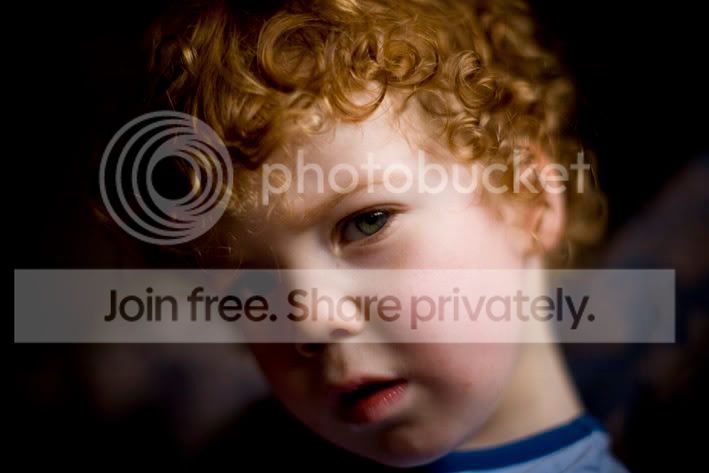
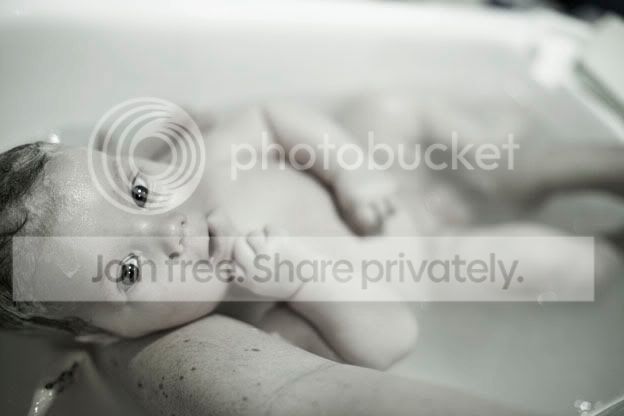
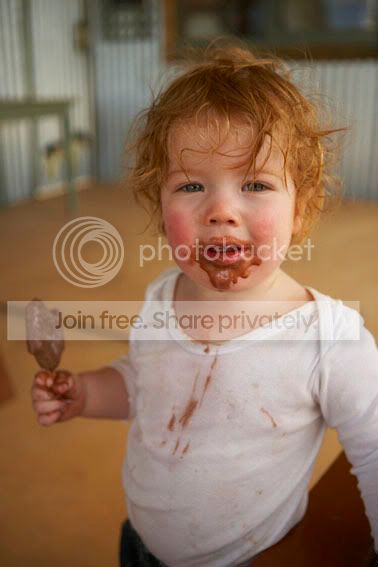
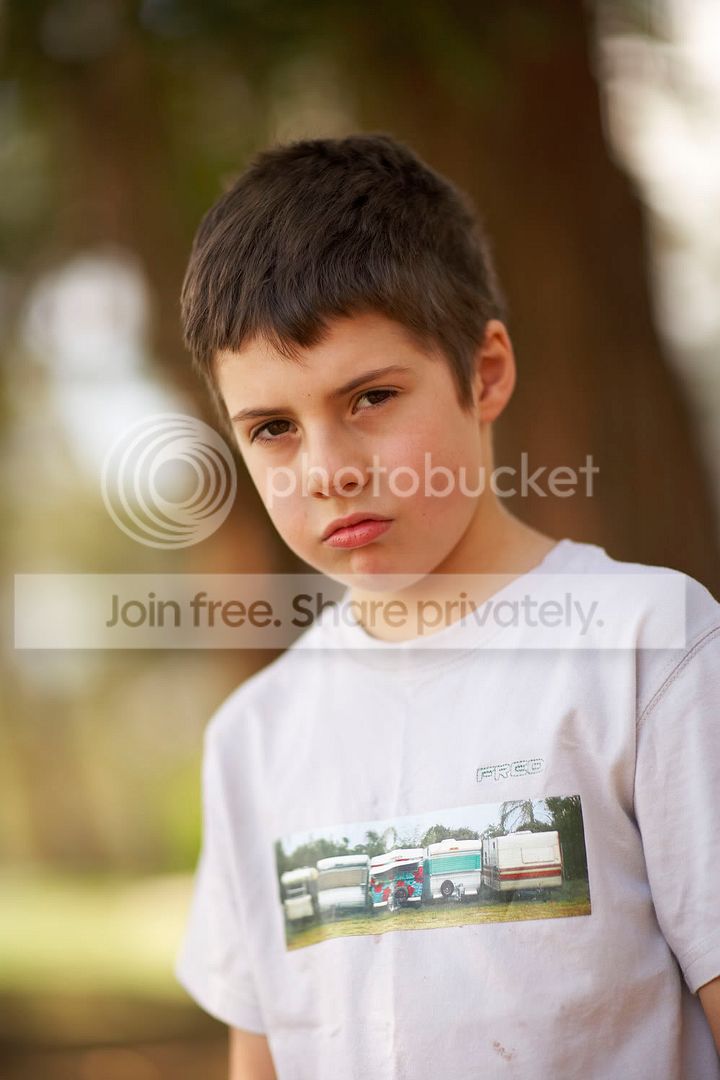
These are awesome.
-
AuthorPosts
- You must be logged in to reply to this topic.