






Cheapest way to shoot BW and get it converted?
Blog › Forums › Photography › Cheapest way to shoot BW and get it converted?
- This topic has 35 replies, 10 voices, and was last updated Sep 16, 2008 at 11:37 pm by
anonymous.
-
AuthorPosts
-
Sep 5, 2008 at 9:30 pm #7720
Zach Matthews
The Itinerant AnglerHey guys –
I am looking for the most economical way to shoot some B&W images on my old F3 and then get them scanned to digital in high-enough res for production (i.e. 5300 pixels by 3300 pixels).
Sep 5, 2008 at 11:45 pm #64746david king
MemberMy favorite film ever is hands down is Kodak Tri-X developed in HC110 dilution B. D76 1 to 1 is another good developer and is a little less grainy than HC110. Tri-X is a little grainy but other than that so many great pictures have been taken with its just magic. Kodak T-Max 400 and 100 are excellent. http://www.kodak.com/global/en/professional/products/blackWhiteIndex.jhtml?id=0.2.26.14.15&lc=en
Fuji Neopan is excellent as well http://www.fujifilmusa.com/products/professional_photography/film/neopan_black_white/400/index.html
I would look around for a lab in Atlanta and have them make proof sheets of your shots and make selects from the proof sheets and have them scanned or printed. David Chapman or the guys at the counter at Professional Photo Resources might be able to point you in the right direction and sell you some film etc. Quite a few folks still shoot film for the look. Check out the book Zone VI Workshop by Fred Picker to get a good understanding of how exposure and development of BXW film works.
You might find APUG interesting and informative. http://www.apug.org/forums/home.php
Photography unplugged is pretty cool you might like it!
Sep 6, 2008 at 2:21 am #64747Buzz Bryson
MemberZach,
I’d start with the lab, finding one that’ll do the scans.
Sep 6, 2008 at 3:04 am #64748 David AndersonMember
Zach, the last B&W I did was on the new (at the time) films that were designed to give B&W through color print labs.
Both Kodak and Ilford made the films – though I can’t remember the names.
400 CN maybe for the Kodak ?From memory, the films when exposed a bit fat had very little grain and looked like 100 ASA proper B&W right up to A3 prints.
Both the films were excellent, though I always rated them at 200 and processed them at 400 to get the nice dense negs you need for good mini-lab prints.
(both films were always a bit flat IMHO without the push)Anyone with a top-end Fuji lab can do scans when the process the negs, so you could ask for just process & hi-rez scan when you put the film in to save money – though the prints with a decent border were always beautiful.
I did a magazine spreads with large prints from the film a lot before digital.
Clients always loved the prints as well.
One problem, the negs don’t age well when fixed in the mini lab process and need to be stored with care.
Once you have the scans and a back-up it wouldn’t really be an issue.www.dsaphoto.com
A picture is thousand words that takes less than a second while a thousand words is a picture that takes a month.
Sep 6, 2008 at 1:08 pm #64749The Itinerant AnglerThanks everyone, very much.
Sep 6, 2008 at 2:10 pm #64750jon olender
MemberI’ve never had any luck scanning B&W from a negative- most people I’ve talked with have thought that the best route to go is to make a 8×10 BW work print (doesn’t have to be perfect, but good) and have that flatbed scanned and you can make further corrections in Photoshop.
Sep 6, 2008 at 2:19 pm #64751The Itinerant AnglerOuch!
Sep 6, 2008 at 2:23 pm #64752MemberI wouldn’t bother with it, Zach.
Sep 6, 2008 at 2:47 pm #64753David AndersonMemberWhy not do it with digital Zach ?
Sorry to say it, but the work you can do from raw when making B&W from digital leaves the old stuff for dead IMHO.
You can filter after the fact, work in color channels and do amazing stuff with contrast.
Cost to you for film & scans – zip..
Toning also has some possibilities.. 😎
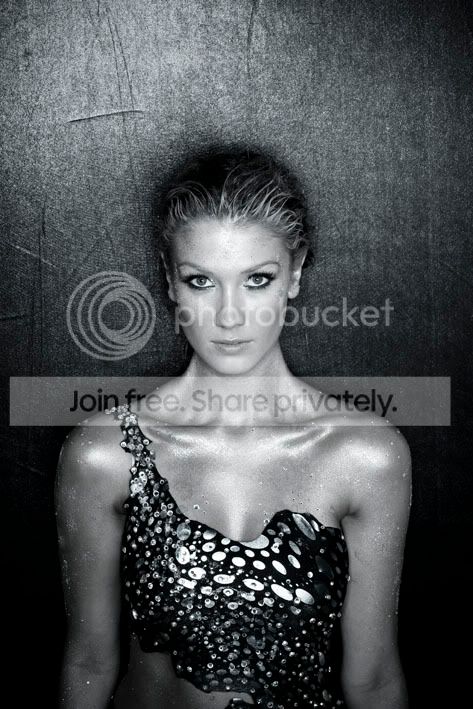
www.dsaphoto.com
A picture is thousand words that takes less than a second while a thousand words is a picture that takes a month.
Sep 6, 2008 at 6:33 pm #64754 Ben CochranMember
Great shot David!
I can’t really add much additional help in this Zach, but I can add a small bit about the B&W conversion process. The one thing that I don’t like about BW conversion, from digital camera’s, is the fact that the blacks seem to be extremely pristine and sterile. I found that after the conversion to BW, as a final step, add a new fill layer with 50% gray. Change it to hue mode and adjust the opacity level until the blacks have more of the old film look. It is the closet that I have been able to achieve and in a lot of cases, it is hard to tell the difference. Hope that helps some…
Oh yes, also; most of the SLR BW shots are not extremely sharp so a slight bit more to the blur side helps some too.
Sep 7, 2008 at 8:53 am #64755MemberSweet shot Dave! Is that what you call a Sheela? Did you use a Ringlight? I agree with you to point but not completely. The best example I can think of for us as anglers as far as the use of BXW film is the Simms stuff that Zach”s podcast guest Tibor Nehmeth shot. There is a aesthetic quality to BXW and color film that is difficult if not impossible to get digitally. The digital look is well digital. I find it kind of sterile in comparison to film. I saw some Epson prints at Photoshop World that come close though.
The new Epson paper is supposed to be very close to a traditional gelatin silver print. I haven’t shot film in about 5 years now and most of the tools I used I don’t have access to anymore. I enjoyed working with my photographs in the darkroom. The darkroom was a intimate experience the really allowed me to focus and study what I had done. The computer dosen’t provide that sort of interaction. The shooting process a well was more focused, no chimping but there was the polaroid process that could provide some instant feedback.
When I see a commercial shot that looks like it might have been shot on film I do a double take. I wonder why? Is it Mojo or JuJu, or just the magic I saw the first time I developed a print in the darkroom!
Sep 7, 2008 at 11:17 am #64756David AndersonMemberThat’s Delta (named after the B&W film perhaps ?
www.dsaphoto.com
A picture is thousand words that takes less than a second while a thousand words is a picture that takes a month.
Sep 7, 2008 at 7:31 pm #64757Ben CochranMemberI really wish that I knew of some good film processing centers for you Zach but I think that Wolf did a bit of a favor for you. Wolf and Ritz are both the same company and the thing that I really don’t like about their processing is the fact that they use automated proprietary software. Te are so used to processing the everyday snapshots that your images could loose the artistic flare that you put into them. I recently went there to use their 7880 plotter for a large print and after 4 terrible prints, I talked them into letting me download the drivers and print directly from my own macbook, all of the difference in the world and printed great. They adjust off of the history data and this can ruin a well-planned and executed shot.
Wow David, your biggest female music artists are much thinner than ours lol. Yea, I know it was corny but what the heck.
I love the gradient that you have in that photograph! I don’t think a lot of people understand just how difficult that shot is to get with a ring flash and you really did a GREAT job of it. I take it that you used peanut oil on the model? You really should get an assistant and my bags are eagerly packed lol.
Also David, I was at JFK recently and was talking with the art director from one of the large US pharmaceutical companies. You probably already know this but he was explaining to me that more and more advertising work is shifting to the Australian and New Zealand market. Said that little, enough to just satisfy the unions, are being shot stateside these days. I tried to shift him, which he seemed very interested, to the Eastern European market and lower model scale rates but the recent events over there have changed that. So, back to you needing an assistant, I will bring a case of Peanut Oil with me too lol…
Sep 11, 2008 at 3:42 am #64758David AndersonMemberPeanut oil huh ? very creative Ben ! 😀
I see a lot of ad stuff coming out of New Zealand at the moment, they have some great photographers and even better locations and their dollar is pretty low as well.
I’ve offered to move there to work, but my wife knows I would just fish and she would have to win bread.. 😉
We have thought about looking for work in New York in June and July while it’s dead here, I hear the money on a catalogue shoot is pretty good – know any good agents ?
www.dsaphoto.com
A picture is thousand words that takes less than a second while a thousand words is a picture that takes a month.
Sep 11, 2008 at 5:27 am #64759Ben CochranMemberAs you know, NY is a very tuff nut to crack and the studio space is very expensive, for a good studio anyway. “Some” of the catalogs pay well but when you consider all of the associated costs, “some” don’t pay all that well.
During June and July, a good amount of the catalogs are actually being shot in South America, I was suppose to shoot one in Norway & Estonia, still pending other problems… 🙁
It isn’t the greatest place in the world but actually China is a great new potential market for catalog assignments and fashion shoots, I am trying to get my foot in that door as well.
Wish that I could help you out mate but it seems that the best I have to offer is the Peanut Oil. A lot of the NY based agents consider photographers to be the people that take most of their pay 😕 A lot of my work is in the Eastern European Market and all of these recent events have me very nervous about my near future, might have to resort to plan B, if I can figure out what that is lol
Sep 11, 2008 at 6:48 am #64760Ben CochranMemberI need to better qualify that last post. A large amount of Product catalogs are actually being shot in Oregon and Seattle. As well as further down along the west coast.
Back before the towers came down, I was living Jersey but worked in Manhattan, directly across from the Kodak photography gallery actually. The trend that I started to notice was pretty wacky and a lot of PS work. I love PS but the direction that I saw a lot of the galleries going in, simply is not my cup of tea.
I don’t know how you feel about Seattle but I am a member of a professional organization that sometimes posts short term assignments, due to increased work flow in some of the very large studios. I will PM the rest to you 🙂
Sep 11, 2008 at 6:49 am #64761David AndersonMemberLet’s just make plan B all about applying peanut oil to hot Australian girls and relax about the future.. 😀 😉
Seriously, all aspects of photography seem under pressure at the moment..
We get a lot of job offers where it’s all I can do not to laugh in their face, but there’s still some good clients around, just have to keep the chin up and keep looking..
Still beats working for a living.. 😉
www.dsaphoto.com
A picture is thousand words that takes less than a second while a thousand words is a picture that takes a month.
Sep 11, 2008 at 7:11 am #64762Ben CochranMemberI have a feeling that you probably have a level of humor like mine LOL Peanut Oil on hot Australian girls, why am I sitting here signing “Dude Looks Like a Lady”? LOL
I know what you mean about some of the laughable offers, I have told some to take that huge budget and purchase a P&S, then just do the shoot themselves.
I actually have a pretty huge project that I am working on now and hope to finish soon. It will put me back on the gravy train and I have already made plans for a self funded assignment that I hope will take me further up the photography food chain and get me closer to my ultimate photography goal’s.
Still, I’m liking this new peanut oil assignment work, just hope OPEC doesn’t claim that as theirs too LOL
Sep 11, 2008 at 10:39 pm #64763David AndersonMemberI found an example of the 400CN film – (no peanut oil ;))
This was a shoot for Rolling Stone (Aust.) of one of our biggest bands, I didn’t have much time or a good location so I did quick individual shots of all 5 members with the 100 Macro and small Canon ring flash and had the lab process the film with a strong blue tone.
The magazine loved it and it was very easy to do..
www.dsaphoto.com
A picture is thousand words that takes less than a second while a thousand words is a picture that takes a month.
Sep 12, 2008 at 4:58 am #64764Ben CochranMemberThat is such a great photograph, David!!!! It is kind of funny as a lot of today’s photographer’s focus on the best lenses and best body’s, including myself far to often. Sharp and very crisp photographs seem to be the majority goal with accurate color correction. Yet, some of the best photographs, ever published, are soft to blurry with bad tones all over the image. Such an adamant resistance against vignette, barreling and so forth, yet we marvel at the old masters that are full of these things, now labeled as bad distortions.
I don’t know, but isn’t it a bit funny that we now rely on software to give the photographs old style look? There are forums and Internet sites full of people asking how to get a certain look, with PS and other software, yet the image is out of camera and shot with what would be considered a terrible camera. Seems that art comes from really bad film cameras and a work in progress is a more common designation in digital. One of the worst camera’s ever manufactured was a very cheap Russian entry-level camera. It was manufactured with such low grade parts that the camera could not come close to anything resembling accuracy. The color, hue and saturation were so terrible that trash bins all over Russia were full of these terrible camera’s.
So funny, as once they found their way beyond the Iron Curtain, galleries all over the world were begging for more of this style of photography. Later it was discovered that it truly was not a style as much as it was just a photograph taken with a terrible camera. Even today, many galleries and museums have exhibits and displays of photographs taken from this camera. The LOMO or, Leningradskoje Optiko Mechanitscheskoje Objedinenie, could have been purchased, brand new, for a couple of US dollars and now there are organizations that are built around this camera. It is hard to find true fully functioning original 1982 LOMO’s today and they are FAR more expensive, than they used to be. Funny though, as they can still be found in some of the small villages, of the ex-soviet countries, and in Russia. The cost there? Just ask about the camera and they will give the cheap trash to you and thank you for getting it out of their house. LOL
Funny how it seems the more we move towards equipment perfection, the further we get from perceived art, with the exception of software as the digital darkroom. Yes, I will still go digital and go with the best equipment but it is more due to the increased cost and declining budgets on assignments. Still I say though, history and true photography art was captured in film, many times with bad body’s or lenses. Today’s art is captured in the digital darkroom and I am smart enough to know that I had better be on the front of this train before I just end up as a grumpy old man with a roll of film and a descent lens with a good body, camera body anyway LOL.
This makes me appreciate your last photograph that much more, it has a great Warhol look about it. 🙂
-
AuthorPosts
- You must be logged in to reply to this topic.