






Thoughts…curbing mid-day “fish” glare
Blog › Forums › Photography › Thoughts…curbing mid-day “fish” glare
- This topic has 14 replies, 9 voices, and was last updated Jun 12, 2009 at 4:00 am by
david king.
-
AuthorPosts
-
Jun 11, 2009 at 7:01 am #8046
Bryan Gregson
MemberHi all
I’d love to get you thoughts on…. getting around mid-day “fish” glare?
I am always capturing glare on my fish shots during mid-day. Yeah I know, not the best time to target good light but the fish don’t factor that in sometimes. I’m using a new cheap polarizer. I don’t have a fancy flash set-up (it would be nice). I know I am a rook-o but man, it’s really bugging me! 😮
I’d love some constructive feedback, any thought or technique about my issue would be great….. photos only now : )
I’m also curious if this can be fixed in PS?
The most recent blown shots, while using the polarizer and turning it clockwise/counter clockwise… until it looked clear. Also, half of my shots were out of focus (more than usual) I’m blaming it on the new cheap polorizer…. but it could be user error ; )
Glare on the fin
http://www.flickr.com/photos/1bg/3615341803/sizes/m/

Glare on the head/back
http://www.flickr.com/photos/1bg/3615342975/sizes/m/

Glare on the water
http://www.flickr.com/photos/1bg/3615344703/sizes/m/
 Jun 11, 2009 at 7:30 am #67792
Morsie
MemberBryan I can’t see a problem with the glare you have there, no detail has been lost and the fish are wet so a viewer would expect to see some kind of glare. I’ve stopped using a polariser because they can be such a pain in the butt.
Alternatively shoot the fish in shadow or get an assistant to hold a scrim ;D
The last shot is excellent, I find the top two shots to be over contrasty and over saturated but it works on the last on.
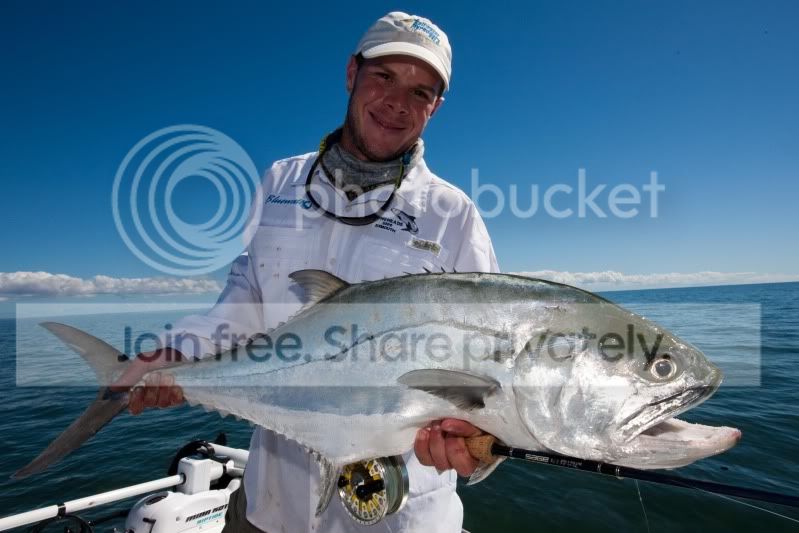
These queenfish can be a terrible fish to photograph because they are so silver but they do have some subtle detail in their skin, easy to blow your metering to pieces with them. I get whoever’s holding them to roll them so I get the least flare.
Morsie
Jun 11, 2009 at 9:48 am #67793 John BennettMember
Bryan I don’t know if I have shots with absolutely no glare but two things.
1) I leave my CP glued to the lens
2) When flashing I try to remember to angle the head so its not directed at the fish. A diffsuer helps with this.This was shot right around noon or 1pm. Cant recal if I angled the flash or not but it is flashed


And as Morsie said as long as the glare isnt overpowerin or a large hot spot I wouldnt sweat it. What I worry more about is not blowing the whites of their bellies/mouths tc.
Jun 11, 2009 at 1:32 pm #67794MemberBryan I can’t see a problem with the glare you have there, no detail has been lost and the fish are wet so a viewer would expect to see some kind of glare. I’ve stopped using a polariser because they can be such a pain in the butt.
Alternatively shoot the fish in shadow or get an assistant to hold a scrim ;D
The last shot is excellent, I find the top two shots to be over contrasty and over saturated but it works on the last on.
These queenfish can be a terrible fish to photograph because they are so silver but they do have some subtle detail in their skin, easy to blow your metering to pieces with them. I get whoever’s holding them to roll them so I get the least flare.
Morsie
Thanks for the honest feedback! I really appreciate it!
Yeah, the contrast boost bumped the saturation a bit. These fish are “blood” red, some appear to look like they are bleeding… almost look fake. I’ll try and turn down the saturation a notch.
It seems to me that most of you guys don’t have the same problem as I, I always capture bad glare….know time and practice ; ) Your “rolling the fish” tactic is very interesting. I will try it!
I’m curious now reading that you don’t use a polorizer. My thoughts were this was my problem, but perhaps its just me ; )
thanks again Morsie
Jun 11, 2009 at 1:36 pm #67795MemberBryan I don’t know if I have shots with absolutely no glare but two things.
1) I leave my CP glued to the lens
2) When flashing I try to remember to angle the head so its not directed at the fish. A diffsuer helps with this.This was shot right around noon or 1pm. Cant recal if I angled the flash or not but it is flashed
And as Morsie said as long as the glare isnt overpowerin or a large hot spot I wouldnt sweat it. What I worry more about is not blowing the whites of their bellies/mouths tc.
Great suggestions! Do you recommend a specific type of diffuser? Will a ghetto rigged salsa container work for this?
Great point about blowing the whites of the belly and mouth. That is my next project ; ) It sits a tad lower on the list than the glare, one thing at a time I suppose.
Thanks for taking the time to reply. I’m very grateful!
Jun 11, 2009 at 2:14 pm #67796Eric DeWitt
MemberBryan, dude, a rookie?
Jun 11, 2009 at 2:24 pm #67797kurt budliger
MemberBryan I think your shots are pretty darn nice, no problem with the glare in these shots.
Jun 11, 2009 at 2:59 pm #67798Zach Matthews
The Itinerant AnglerHey Bryan –
First of all, I agree with Eric that you have no need to apologize. Secondly, I agree with everyone that a certain amount of wet glare is necessary; it’s like the inverse (shadows)–you need it to show the depth and texture of the surface.
Generally, blown fish shots come from holding the fish broadside to the camera while using fill flash. Bonefish are wicked at this. You aren’t really having this problem at all, but there are some ways to prevent glare generally.
(1) Meter off the brightest part of the fish and let the rest of the shot underexpose. You can fix the underexposed areas in Photoshop in post processing while retaining the non-blown highlights. Zach’s #1 rule of shooting shiny stuff: Once you’re clipped, you’re hosed! 🙂 Have a look at the single-image HDR post at the top of this board for how I split out lowlights and highlights and bring them closer together. I do that all the time, as below, and you can’t see any photoshopped-ness at all.
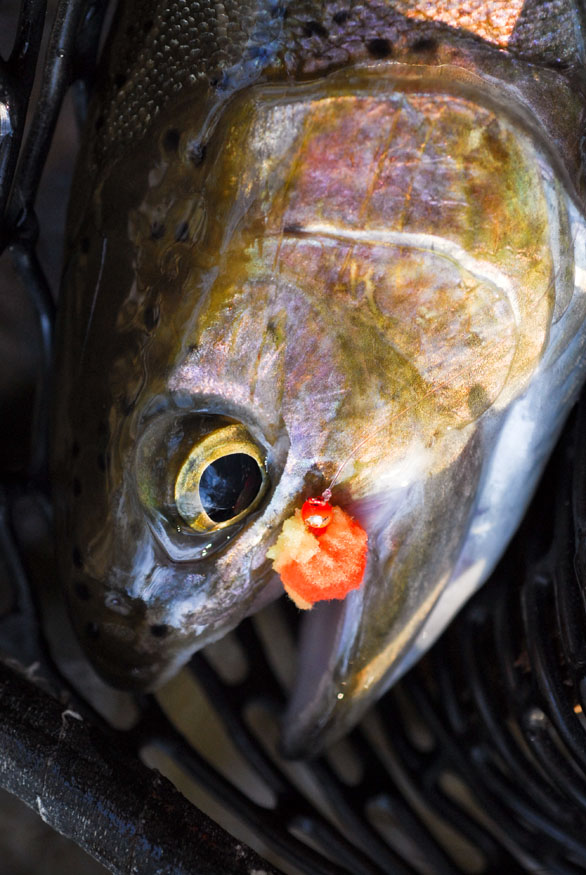
(2) You can physically affect the situation by putting the fish in the shade, as others have suggested. I find the cavity under the prow of a flats boat to throw an excellent shadow and the angler can hold the fish from above.

(3) I like polarizers and use them all the time. Shelling out for an expensive polarizer will bring optical clarity back to the image but won’t really change the overall effect much. The biggest advantage of a polarizer in outdoor bright daylight is that it cuts light two stops; it’s a set of sunglasses for the camera.
(4) I would change how you are post processing some. But it depends on the application. We’ve discussed this before. Your images as printed above would be highly appropriate for The Drake or This is Fly. Neither Fly Fisherman or American Angler would be likely to run them, however. It’s just a different take on photography. However, when you jack up the contrast as you have done above, one of the things that happens is the blacks get blacker and the whites get whiter. You can achieve the same effect without clipping out the whites, again by following my single image HDR technique. Essentially you will grab the highlights and float them on a higher layer, then lower the rest of the contrast as you see fit; the whites will stay more grayish and will not clip.
Best,
ZachJun 11, 2009 at 3:05 pm #67799Neal Osborn
Member. . . get an assistant to hold a scrim ;D
Morsie
Damnit Morsie, don’t give away all the secrets 😉 LOL.
Joking aside, the scrim is a wonderful tool for these shots. However, assistants are hard to come by, aagghh.
Bryan,
I think your shots are wonderful. Nice tonal range and the shadows/highlights appear complimentary. Like you said, a bit over-saturated/contrasted but there is a “peaceful” quality to the shots which I enjoy. They remind me of a calm enjoyable fishing experience instead of the high key, pop photos which are becoming more popular in the industry.
Jun 11, 2009 at 5:26 pm #67800MemberBryan, dude, a rookie? REALLY? Sstop worrying about unimportant technical details like a little bit of glare on wet fish. They are wet and supposed to reflect light!! The shots on your flickr page have something alot of guys can’t put into their shots if they had to: feeling and emotion! Your work speaks for itself. Keep it up.
LOL, Ha! Yep, el-rook-o here, really ; ) I know my abilities, try not to lie about em’ ; ) This little tid-bit really bugs me, I always get some glare and like to learn and grow from my mistakes. The learning part photography is what keep me interested.
Thanks for the words, it’s very encouraging…. and the feedback!
Jun 11, 2009 at 5:29 pm #67801MemberThe polarizer’s effectiveness varies with the angle of the light light source. This can be problematic with water scenes and wet subjects because you’ve got multiple light sources/angles when you consider the reflections. I find as I rotate the polarizer some areas of the scene look great while others don’t, continue rotating and the offensive areas start to look good while losing the other, can’t get it all.
I also find, and seems to be the case with the shots you posted that the most offensive glare comes from the overhead reflection of a high white or overcast sky (especially in the second and third shots). This is nice light to be shooting in but you don’t want to include the sky or its reflection in the shots. By moving the fish under shade (tree canopy or the shadow of an angler) you can eliminate the overhead white reflections on the fish. Notice how in John’s second walleye shot there is a lot of blue reflecting from the overhead blue sky, not nearly as offensive as the white reflections primarily because the blue sky is pretty darn near medium toned (not nearly as bright). Our eyes tend to get drawn to the brightest parts of an image first.
Fantastic advise!… I’ll try to pay better attention to what the sky is doing next time. Good thoughts. Thanks!
Jun 11, 2009 at 6:47 pm #67802MemberHey Bryan –
(4) I would change how you are post processing some. But it depends on the application. We’ve discussed this before. Your images as printed above would be highly appropriate for The Drake or This is Fly. Neither Fly Fisherman or American Angler would be likely to run them, however. It’s just a different take on photography. However, when you jack up the contrast as you have done above, one of the things that happens is the blacks get blacker and the whites get whiter. You can achieve the same effect without clipping out the whites, again by following my single image HDR technique. Essentially you will grab the highlights and float them on a higher layer, then lower the rest of the contrast as you see fit; the whites will stay more grayish and will not clip.
Best,
ZachZach –
Thanks for the advise input and advise! Never tried the HDR technique, I’ll for sure check it out.
Also, interesting thoughts on post processing. I don’t know what I am doing, basically just push a bunch of buttons until it looks ok ; ) I haven’t really perused getting paper published, I don’t have the skills yet. BUT I really love the learning process!
Thanks for taking the time to reply!
Bryan
Jun 11, 2009 at 7:15 pm #67803john michael white
MemberBryan,
I’m with Eric, and the others…. your images are NICE! I don’t think I have ever seen one of your images here that didn’t make my jaw drop…
With that said, your question and this thread are very interesting.
Jun 11, 2009 at 10:14 pm #67804MemberBryan,
I’m with Eric, and the others…. your images are NICE! I don’t think I have ever seen one of your images here that didn’t make my jaw drop…
With that said, your question and this thread are very interesting. Thanks for raising it.
HA! thanks man, I really appreciate the words!
But honestly guys, I’m not fishing for complements here, just looking for tips and tricks for the next time.
There has been some excellent thoughts and ideas on this subject. I really admire everyones work, its inspiring to say the least. Thank you all for taking the time to help a brother out.
Jun 12, 2009 at 4:00 am #67805david king
MemberI wouldn’t worry about specular highlights, they have no detail. You could use the auto bracket feature in your camera to give yourself a choice of exposures. You can recover some detail in PS camera Raw, Aperture, and lightroom. Try to find some shade!
-
AuthorPosts
- You must be logged in to reply to this topic.