






Things you can do with a waterproof point-and-shoot camera
Blog › Forums › Photography › Things you can do with a waterproof point-and-shoot camera
- This topic has 15 replies, 7 voices, and was last updated Mar 25, 2009 at 9:21 pm by
 Mike McKeown.
-
AuthorPosts
-
Mar 17, 2009 at 3:24 am #7968
Neal Osborn
Member
Slideshow http://homepage.mac.com/nealpod/Sites/olympus770sw/index.html
I love my waterproof point-and-shoot camera (Olympus Stylus 770SW). It is essentially worry free, it can take a drop from 10 feet without damage, it can get wet, and it can submerge very deeply in the water without concern. It is with me on the river and on every vacation. After two years I have learned how to unlock it’s full potential. It certainly has limitations compared to my dSLR, but it’s potential never ceases to amaze me.
Frankly, I am frustrated with the amount of incorrect information posted on the web about these cameras. Mostly undeserved negative trash talk. Many people think they are too slow or offer only generic photo quality. Not true. In addition to offering waterproofness, convenience, and being shock-proof and submersible, they are great in low light and macro situations. Too many fly fishers give up on their waterproof cameras too quickly.
In an effort to combat negative web chatter and offer good clean advise, I thought it would good to post some quality examples of “keeper” photographs captured with a waterproofer.
Here is the slideshow I created of photos from my Olympus Stylus 770SW camera. It is best viewed in the “slideshow” option by clicking the white square at the botoom, the images are larger that way. http://homepage.mac.com/nealpod/Sites/olympus770sw/index.html.
As you view the pictures notice that the metadata is included on the bottom. This should help you better understand how each image was captured. [Edit: woops, the EV metadata on all pictures came out as zero, don’t know why that happened, sorry,] Most of the images are out of the camera with only minimal post editing manipulation. I have alerted you when Photoshop was employed to give an artistic effect. Remember, once you learn to manipulate the scene modes in combination with adjustments in ISO and exposure compensation, your camera will come alive. That’s when it gets fun. Your point-and-shoot is a good camera regardless of the brand or price point. Additional tips and tricks are posted at FAS.
A few tips:
1. In low-light (early morning or evening), use the ambient light setting and turn off the flash. Adjust the ISO to 400 or greater or know when to break that rule for creative effect. For example, in the picture above I actually tricked the camera to choose an automatic ISO which gave the sky a wonderful dark look while maintaining a good tonal range. Later in the slide show you will see examples of water shots in the pitch black early morning hours and in my opinion the results are spectacular, even better than most entry level dSLR cameras. Make sure to stabilize the camera on a tree or a railing or something to avoid shake and blur.
2. Consider using the macro mode without flash to get creative outcomes, especially indoors.
3. Never settle for the first image the camera gives you. Always look at the LCD and ask yourself how the shot could be improved by changing the exposure compensation or ISO or even using a new mode altogether. I love using the candlelight mode for taking restaurant shots.
4. Take your waterproof camera for a swim. Seriously, it loves being in the water. Try getting the kids or family in creative poses like half-in-half-out of the water. Or do the same with your fish. You can also hold the camera in the water and photograph the fish swimming away.
5. In general, the underwater modes will give you a funky white balance – more toward the green/aqua spectrum. Remember to adjust the white balance when this happens OR use a invaluable trick I’ve learned – desaturate the green/aqua in your photography software program.
I would LOVE to see other examples of keeper shots from the waterproofers out there.
Mar 17, 2009 at 11:18 am #66967keith b
MemberVery nice indeed Neal.
Mar 17, 2009 at 11:32 am #66968MemberThat brings up a good point Keith – the video sucks on the 770SW >:(.
Mar 17, 2009 at 2:39 pm #66969 Bob RigginsMember
Very nice article and slide show Neal. I’ll have to try some of the techniques with my Pentax Optio W30. It takes good “snap shots”, but I really haven’t tried anything fancy with it. I use it mostly on the kayak, so I don’t have (or take) a lot of time to figure out settings. Here is one image I took with it that I thought turned out nice.

One problem I am having with it is overexposing light areas when I am shooting into dark backgrounds. You can see this, to some extent, in this picture where sunlight is hitting some of the leaves and branches.
Here is another shot that I like, although it lacks any refinements.
Mar 17, 2009 at 3:05 pm #66970MemberNice pictures Bob, I especially like the first one since I was standing at your side in the Smokies that day 😉
I read a bit about the W30 and here is what I came up with to help you out.
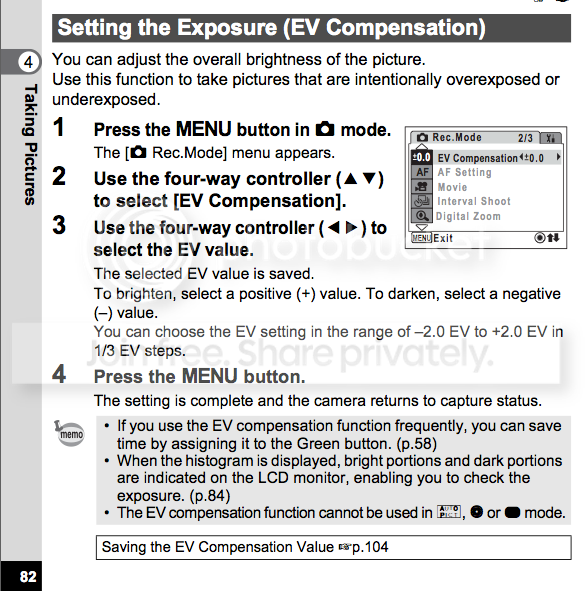
The W30 permits +/- 2 EV exposure compensation in 1/3 EV increments. dialing in -.7 EV of exposure compensation for example would produce a photo with highlights intact.
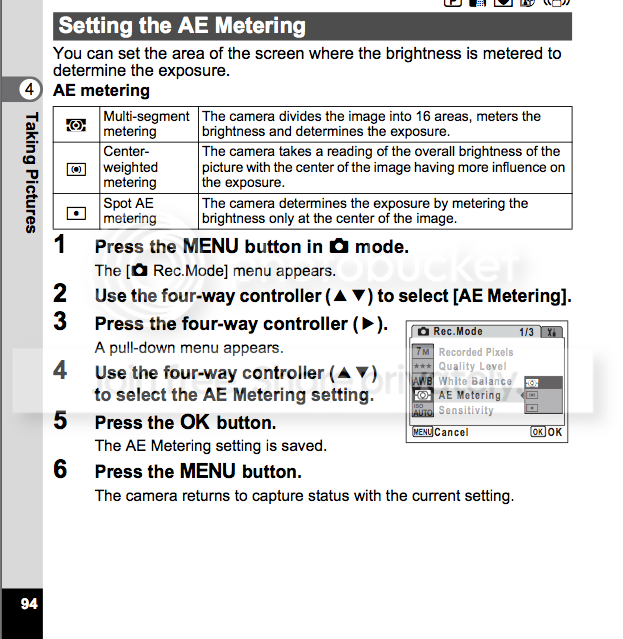
Multi-segment metering is the default setting for the W30, but center-weighted or spot AE options may be selected.
Download the product User Guide here http://www.pentax.jp/english/support/man-pdf/optio-w30.pdf
Go to page 82 for a discussion on setting the exposure compensation during a shot. It’s easy once you learn and then you will get better tonal range and less blown highlights and dark shadows. I refer you to the post Mike started about shooting fish pictures, in there John B. offers good pointers about metering the subjects based on the situation. For me, metering is like dry fly fishing – yes it is important to actually put the fly in front of the fish, and so it is important to put the “meter” on what you want to correctly expose the most.
Go to page 94 and 96 for a discussion on setting the AE (auto exposure) and ISO respectively.
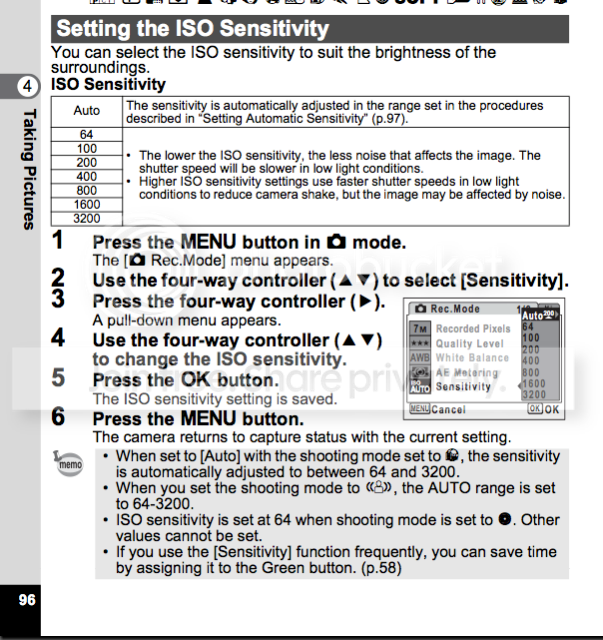
Putting these three variables together during a shoot will greatly improve your photographs and it is very very easy to do once you take a few minutes to learn how to access the settings. Practice at home first in low light and then on the lawn on a sunny day.
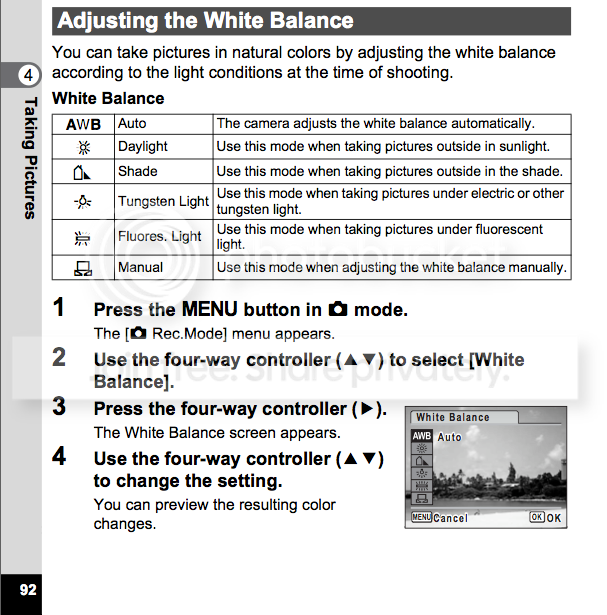
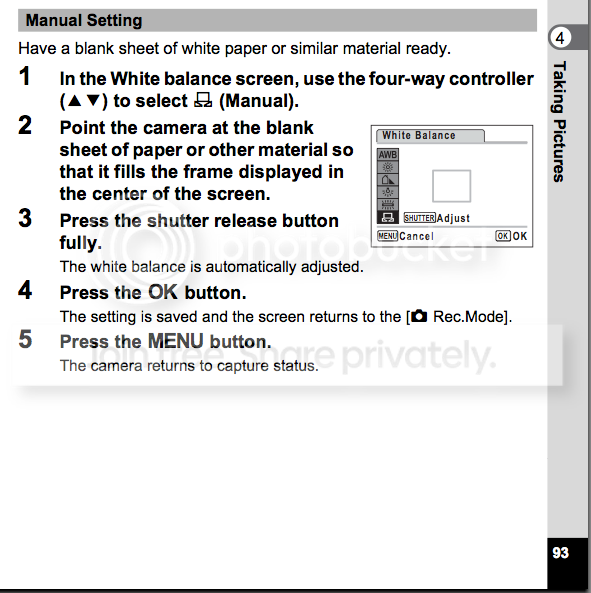
Also the PW30 allows for manual white balance correction, that is sweet. Play around with that and you will notice great improvement in color.
 Mar 17, 2009 at 3:24 pm #66971
Mike Anderson
MemberI agree that there are some awesome P&S cameras these days, some with Leica glass. It was what they can’t do that pushed me over the edge to buy a DSLR. Zoom and lots of it.
Mar 17, 2009 at 5:48 pm #66972Douglas Barnes
MemberJust like any tool it’s a matter of knowing how to use it. WP point and shoot cameras can do an adequate job of capturing what’s in front of them, sure. Snapshots and such.
Mar 17, 2009 at 5:56 pm #66973Bob RigginsMemberJust like any tool it’s a matter of knowing how to use it. WP point and shoot cameras can do an adequate job of capturing what’s in front of them, sure. Snapshots and such. But for large, publishable work they’re not the sharpest tools in the shed IMHO.
You are absolutely right, but I shoot photos for my own enjoyment, so it is nice to be able to get the most of the tools at hand.
Thanks Neal.
Mar 17, 2009 at 6:22 pm #66974MemberJust to clarify – I never intended this to be a comparison post about P.A.S. vs other cameras.
Mar 17, 2009 at 7:24 pm #66975 Colin M.Member
I have to agree, it seems like alot of these are looked down upon, i’ll post a couple amazing shots i’ve gotten with a stylus 730 (i think thats the number)
Mar 24, 2009 at 11:12 pm #66976Colin M.Memberhere is a merged panorama of several pictures of a sunset at taylor park, unfortunately i dont have a larger version because the original photos are on a dead harddrive, (i had every album from the 3 month trip backed up except for the one with these photos in it…talk about a bummer) but i think you get the idea…
without being there, it wouldnt matter what camera i was using…although for many applications, nothing less than a top notch dslr will do, however you can come up with some pretty amazing photos on “lesser” cameras if you are in the right place at the right time…plus if i drop mine or it goes swimming, no damage done…take your dslr for a swim and you’re gonna be pretty po’d…
Mar 24, 2009 at 11:27 pm #66977Colin M.Membera couple more examples….
Mar 24, 2009 at 11:37 pm #66978Colin M.Membera few more illustrating macro capabilities as well as some shots to give you and idea of the underwater ability…remember these cameras are 1/8th the cost of dslr’s and about the size of a pack of cigarettes (not that i smoke, but its the most comparable thing i could think of)
the last shot is one of my favorites, just thought it was kind of neat i could get the hopper to stay there long enough for the picture…again… right place…right time…
Mar 25, 2009 at 5:09 am #66979MemberGreat pictures Cole.
Mar 25, 2009 at 8:57 pm #66980Colin M.MemberThanks, just trying to back you up and show that there is an awful lot you can do with a “simple” point and shoot…
glad you enjoyed some of the photos…
Mar 25, 2009 at 9:21 pm #66981 Mike McKeownMember
Mine will follow once I am done iwth post production, from my recent trip…
Agree completely with Neal, takes a bit of getting used to, but the 770 takes great pics…
-
AuthorPosts
- You must be logged in to reply to this topic.