






Sunsets
Blog › Forums › Photography › Sunsets
- This topic has 13 replies, 7 voices, and was last updated Sep 3, 2010 at 2:48 am by
kurt budliger.
-
AuthorPosts
-
Aug 30, 2010 at 4:25 pm #8430
graham owen
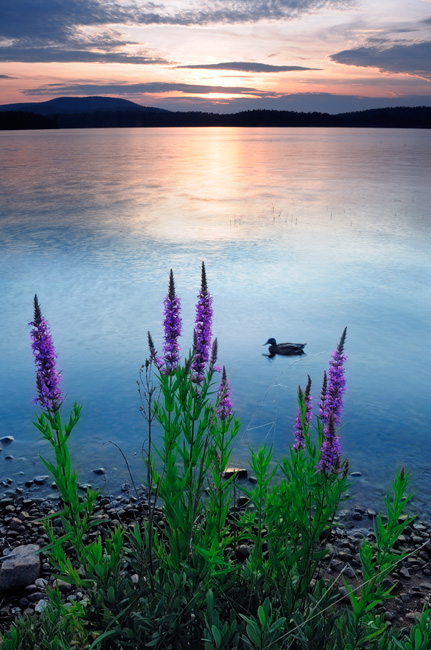
MemberI’m sure we all have some nice sunset shots on the water..
Here’s a few from my trip to the Adirondacks last month.
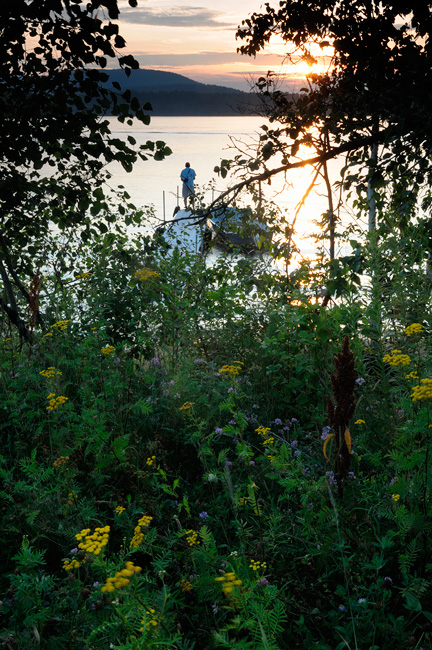
My friend Luke casting dries to smallies on Tupper Lake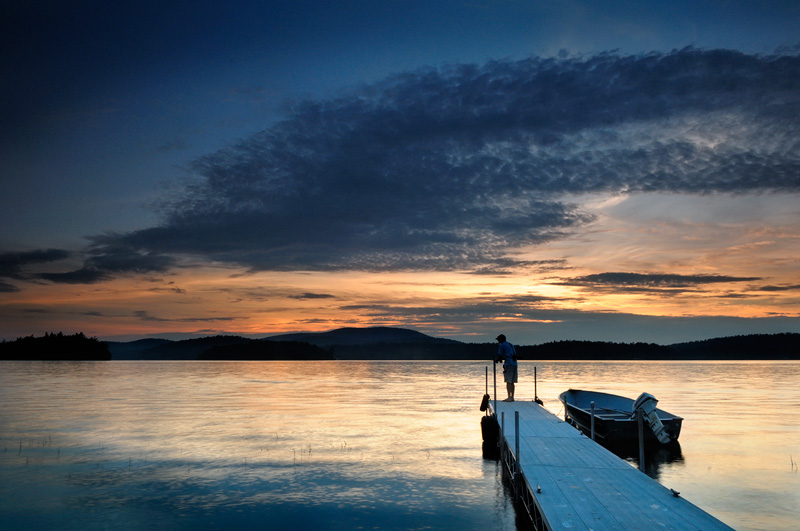
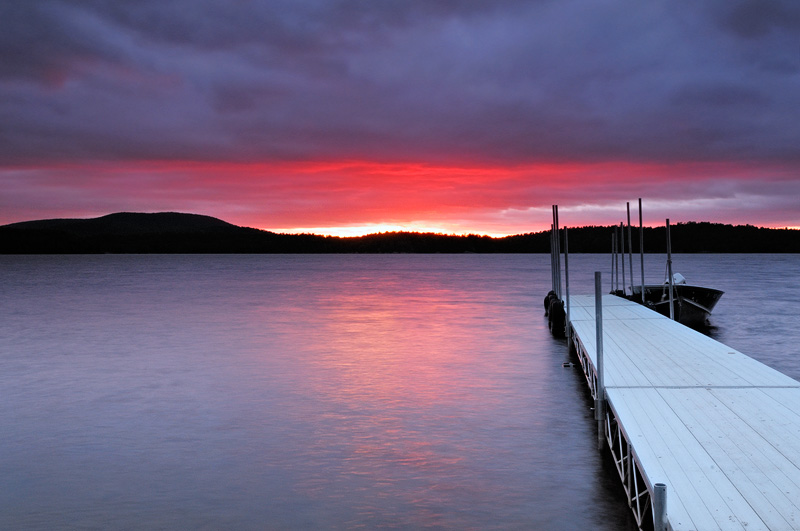
And my favorite Adirondack sunset from last years trip.
 Aug 30, 2010 at 5:29 pm #71209
Douglas Barnes
MemberSolid!
Aug 30, 2010 at 6:29 pm #71210benjamin sandoval
MemberNicely done Graham.
Aug 30, 2010 at 6:53 pm #71211Corey Kruitbosch
MemberGood stuff Graham!
Aug 31, 2010 at 3:17 pm #71212MemberThanks Doug, Cor and Benny.
Aug 31, 2010 at 8:02 pm #71213 John BennettMember
You’d have a hard time convincing me software is the way to go. Once in a very blue moon will I see a post edit “merge” that I actually like.
Work enough with filters and most (ive yet to meet anyone that prefers software over filters) and you just begin to appreciate getting it right in camera.
10 stops to 6 stops of light reduction for this mid day photo under a bright sun. Have fun acheiving that with that in post 🙂

sunset with grad nds


Sunrises with various grad and reverse NDs are well as variable ND

 Aug 31, 2010 at 9:58 pm #71214Member
My two cents:
Used them for years and could go either way on filters. Yes they’re great for set up stuff with tripod, and were pretty much mandatory for film (and still are today for daytime water blur, etc.- great work J Bennett, BTW). However, they can be a real a killer for spontaneity and/or action fishing photography when folks are involved. Usually, I’d just rather get shots from different angles, with different settings etc, and sort it out later at home instead of fumbling with filters and asking my subject to wait, only to get home with one or two shots in the same amount of time. Yes, Photoshop can achieve the same results if one is careful not to clip their highlights during exposure and is good with layer masking etc. Pros and cons I guess.
Aug 31, 2010 at 10:14 pm #71215MemberGorgeous photos John and Douglas!!! I agree with respect to needing filters to slow down the shutter speed, I was wondering about shots needing to control dynamic range.
For example, the second shot I posted above, the trees above the horizon are darker than I would like, and I think I would have been better off merging two exposures in Photomatrix, to create a nice green frame around the subject.
The shot below has the land above the water line darker than I would like.
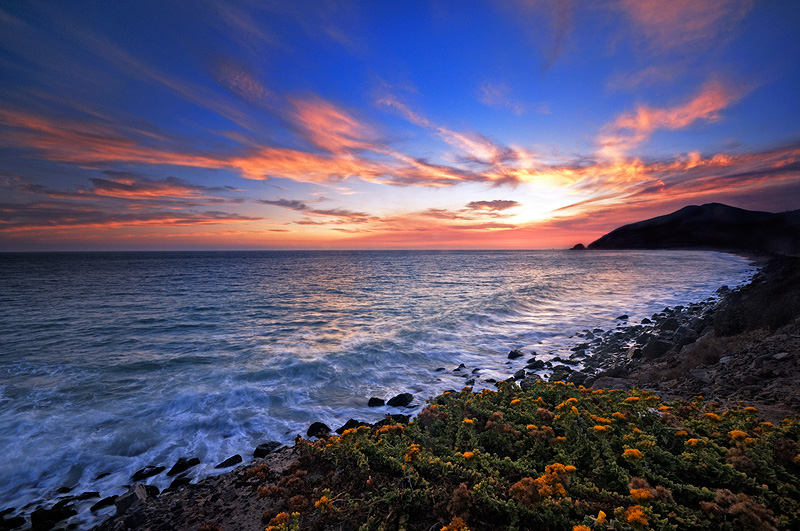
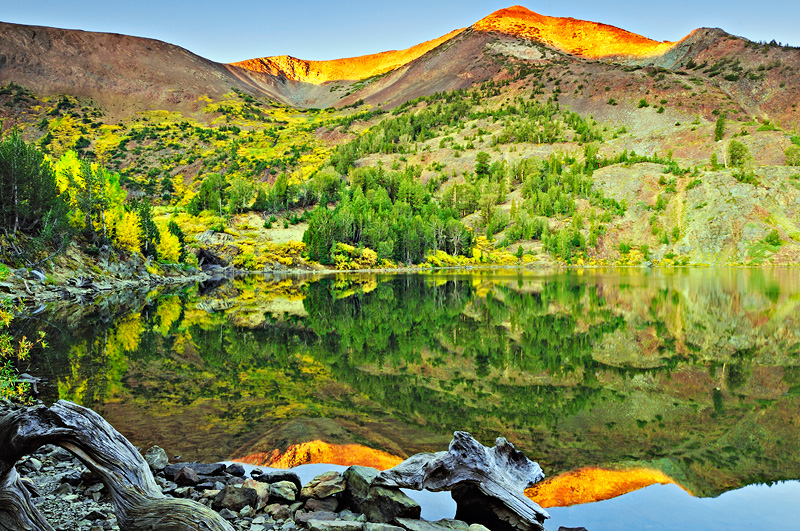
I would have prefered to not have the mountains tops on the left and right side darkened by the split grad in this shot.
 Aug 31, 2010 at 11:17 pm #71216Member
Graham,
Great stuff all around! Kudos. Regarding these specific examples:
Being against the sky and backlit, the mountains above the waterline in the first one look quite natural to me just like they are. The human eye is used to these compromises.
The second one, not so much. It has a real HDR look to it IMHO. (A dude on that lake in a drift boat with/without major bendo would have made me not notice so much)… 😉
Sep 1, 2010 at 10:06 am #71217John BennettMemberHow refreshing 🙂 Guys not afraid to point out the “faults” in their *own* pictures :). True, photogs tend to be hyper critical of their own work, but its the goal to “perfect” the image I guess.
Usually I find HDRs”telling” for lack of better words..I will say Douglas your second shot is one of the rare ones I really like.
I find thats kind of true of HDR…When they “work” they really “work” and other times theres something that …dunno right word…doesnt sit “right”. Maybe because often when I see them its people learning the software and still trying to master it…dunno.
The shots I think are cool are when people use the process to create something thats more work of art than representative of what the eye might see.. Your first is like that Douglas, I like that to but sort of feel its more a wrok of art, than a photo..
I agree that there are times for both and I stongly agree that working with filters can be a chore.But I dont find it that much more of a chore, than without. Without a filter Im going to meter the sky and meter the foreground, then set my bracketing.
With a grad nd I expose for the foreground and eyeball (experience more than anything else) whether to use a grad, reverse, or stack grads. 50% of the time I use them by hand (both filters and camera.)
Singh Ray Gold/Blue
Sing Ray 2 stop soft grad
ISO 1,000 1/160th
hand held

around 10am on a summers day, so lights starting to get harsh
Same set up, hand held (camera and filters)

Graham in order to avoid darkening the trees yet still hold back the sky I angled the 4×6 to try to match the treeline rather than horizon ( you can see the clouds in the lower left are blown whereas I kept detail in those higher.
…Not a perfect solution but it helps Sep 1, 2010 at 2:55 pm #71218Member
Cool images John, very creative. I’m very critical of my photography, and haven’t captured a single image yet that I study and say to myself, this photo is perfect. There’s always something, dof, composition, shutter speed, subjects head angle, something missing, etc, that annoys me, but, this gives me fresh motivation and energy to keep trying to improve my skills. I don’t delete all of my missed shots, I study the exif data, in an attempt to help find solutions.
That said, outdoor photography is one of the greatest joys in my life. I dearly look forward to getting away from my desks (fly tying and computer) to spend time alone in nature, on and off stream, enjoying the sights, sounds and smells, while clicking away.
Sep 1, 2010 at 4:48 pm #71219John BennettMemberAint that the truth.
Very few pictures I dont know that couldnt be improved upon. Usually chuckle when friends/family rave about something and Im like…are you kidding..they arent that good 🙂Lansdscape is an area I’m really trying to work on. Problem for me is Ontario and in particular the area I live in, it’s just not very inspiring…Mostly being rural flat featureless farm land.
I play with things, experiment, delete alot 🙂 and I enjoy trying to “problem solve”.
Sep 1, 2010 at 11:27 pm #71220 Matt JonesMember
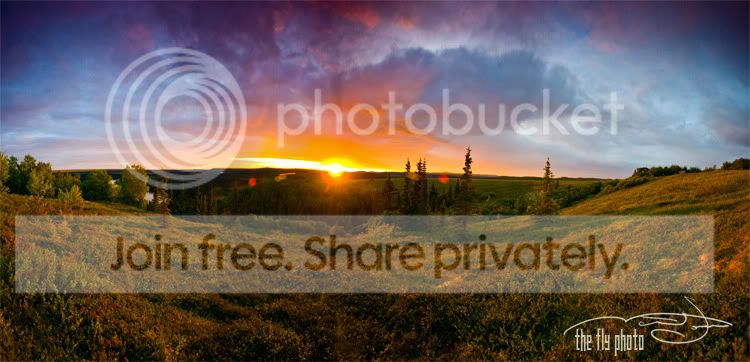
Here are some sunset shots from last week in Alaska…
i was using 2 and 3 stop ND filters. I regrettably didn’t have a reverse ND filter, though. I love using filters, it just adds the fun experience to photography rather than on the computer screen.
www.mattjonesphotography.com
Sep 3, 2010 at 2:48 am #71221kurt budliger
MemberFilters vs. Software for dynamic range seems to have replaced the jpeg vs raw debate and before that the film vs. digital debate. 😉
I find I’m using a mix of methods in my shooting, sometimes finding a two or three exposure blend (not into using the hdr merge software) just the ticket while other times balancing the scene with a 2 or 3 stop grad. It really depends on the scene, the dynamic range, composition and my general mood. I find I go for the blend option when the horizon is not uniformly level, like in Graham’s example.
The trick for me in achieving a look that’s not hdrish is to layer the exposures in Photoshop, apply layer mask(s) and gradually paint (ie multiple passes) in the areas I want using a relatively large, soft edge brush with a reduced opacity. If it’s a sky I’m adding I’ll make the brush quite large and go over the entire area with one big swipe at an opacity of 30%, not worrying if I hit the horizon (soft edge brush critical). Then I’ll reduce the size of the brush and paint some more, all the while adjusting the opacity, usually down until I’ve got the exposure I want with no signs of the blend. It takes some practice but can be done pretty quickly on most images.
2 stop grad

Hand blended using the above technique from two exposures

Hand blended

Hand blended

2 stop grad

Which technique do you think I used on this one?

And this one?

-
AuthorPosts
- You must be logged in to reply to this topic.