






Grey, Flat Light
Blog › Forums › Photography › Grey, Flat Light
- This topic has 21 replies, 11 voices, and was last updated May 15, 2008 at 11:25 am by
 John Bennett.
-
AuthorPosts
-
May 10, 2008 at 1:48 pm #7559
 Michael PhillippeMember
I am shooting a Canon Digital Rebel XTi with an EF-S 17-85 lens most of the time. I was recently in Chile and shot about one thousand images. In the sunshine I used a polarizing filter and go some great pictures, but low light was another story altogether.
On the days with solid ovecast my images are really grey and flat. Almost no color. I have experimented; read everything I can find; and, I am still frustrated. It certainly isn’t the camera. :-[
What settings do you use for those grey days on the river?
By the way, the area I was fishing in Chile (and in the attached image) is now buried under ash from the volcano eruption last week!
Thanks.
May 10, 2008 at 5:01 pm #63134Aaron Otto
MemberBy no means am I even close to the most knowledgeble here on the board, but I would suggest using two things; first fill flash as well as preset white balalnce or temp control of white balance from or for antother condition to help liven up the flatness.
a
May 10, 2008 at 10:00 pm #63135 Chad SimcoxMember
Flat Light is great for Black and White photography. Also, when shooting color in flat light, I will sometimes over expose by a stop to try and help get some pop into my colors. You usually have to compromise with blown out highlights or lack of detail in darker areas with little to no color saturation. A lot of times, a gradient filter will be needed to keep detail (if there is any) or exposure down in the sky.
http://society6.com/grainfarmer Fly Fishing and Landscape open edition Photography prints.
http://grainfarmer.vsco.co/ iPhone photos
http://instagram.com/chad_simcox InstagramMay 11, 2008 at 12:07 am #63136Zach Matthews
The Itinerant AnglerI actually prefer flat light over any other sort; no shadows, great color saturation.
Here’s what I’ve learned, however; a lot of the first generation camera bodies (Nikon’s D70, for instance) tended to have a strong gray-balance that often didn’t represent color very well, particularly at short shutter speeds and high ISOs. The newest round of cameras (Nikon D200, D80, D300 – I don’t know the Canon equivalents) have done a better job of that. So, some of it can be the camera body, although I don’t know Canon’s propensity to do this.
But, the likelihood is that most of your problem is that you aren’t exposing the shots long enough to saturate the images. Try rolling over to shutter-speed priority and choosing a slower-than recommended shutter speed. Definitely think about using fill flash when possible, and roll the ISO *down* to 100 or 200, not up. Low light is not the time to be trying to capture freeze-frames or letting the camera slide into snapshot/party mode. If you find blur is a problem, use a rest (like shooting a rifle) or bring a monopod or tripod.
Here’s an example or two:

(A very flat light day). You can use the motion blur to suggest movement rather than freeze it; this is something National Geographic does all the time.
For some reason, digital camera sensors tend to get fakes out less when the frame contains a broad range of colors. If you have reds, blues, yellows, and greens in the shot, the automatic white balance the camera chooses is a lot less likely to be so gray. But, if you aren’t getting any results out of any of these suggestions, at least flip your white balance over to a cloudy day setting (or a warmer kelvin temp).
Zach
May 11, 2008 at 12:11 am #63137The Itinerant AnglerPS – Last tip.
May 11, 2008 at 2:15 am #63138 John BennettMember
Bascially you need to overexpose and if possible try to compose so theres as little sky as possible in the frame.
I overexposed this by more than 2 stops. I blew the sky but was able to get some detail and colour in the Merlin. It was a dreary rainy day. If I hadnt overexposed so much the Merlin would hav been little more than an indistinguishable shape. As Chad pointed out the penalty is blowing the highlights in this case the sky.
Not a great shot but a) i illustrates the point and B) is the only time Ive caught a Merlin eating. Ask me if I care about technially good photos at such times:)

The next was during Lightsnow fall, and completely overcast. You can see flakes in the BG
ISO 1600 1/500th flashed and + 1/3 EC

So you can get detail, you can et some colour but you will likely need to overexpose and as much as possible remove the sky from you composition. Else it looks like the sky in the Merlin shot (although that extreme a 2+ stops overexposed). Thats actually a good test to, if your not bowing the sky on those days your not exposinglong enough.

Lastly people that do alot of long exposures with water, live for overcast days rahter than sunny days
It allows for longer shutters speed and you can bring it out and get nice creamy water.May 11, 2008 at 3:19 am #63139mike j
Memberahhhh, makes me wish I could explain the tricks performed with E-6 and push processing.
May 11, 2008 at 7:06 pm #63140Chad SimcoxMemberA bit off topic, but Zach I wanted to tell you that those two images make me homesick for two different places. The first for Tennessee, it reminds me of a place on the Caney Fork and the beautiful foliage on all the streams. And the second really reminds me of a few places in Colorado.
Alas, I’m stuck here in the urban circus known as Hollywood with no great rivers close enough to justify make an afternoon jaunt to with gas being $4.20/gal.http://society6.com/grainfarmer Fly Fishing and Landscape open edition Photography prints.
http://grainfarmer.vsco.co/ iPhone photos
http://instagram.com/chad_simcox InstagramMay 12, 2008 at 10:36 am #63141 David AndersonMember
I love overcast because the sun here hammers the hell out of everything from about 10am till 4pm and it’s hard to shoot in.
With a light overcast I would just bump up contrast, blacks and saturation in CS between raw and Jpeg – I also tweek the white balance up to around 6500 to fight off that dead skintone thing.
With heavy overcast it’s harder, but as others have said avoid the skys and open up exposure to keep things bright – more saturation and a white balance of 7500 will help.
One more thing – sometimes it’s good to show the conditions for what they are, it gives a sense of adventure to the photos IMO.
Here’s a sample of the kind of grey & rainy day that really makes the fish fire in New Zealand on the Tongariro river in winter.
I’ve left the sky in this to show how crappy the day is.
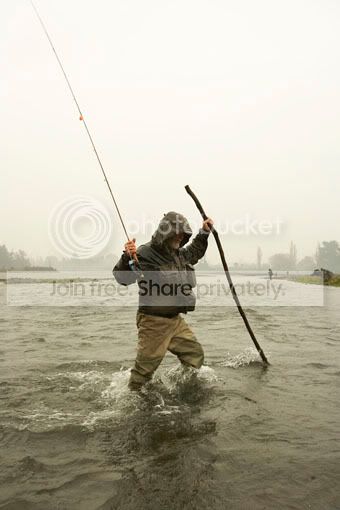
And this in the rain.
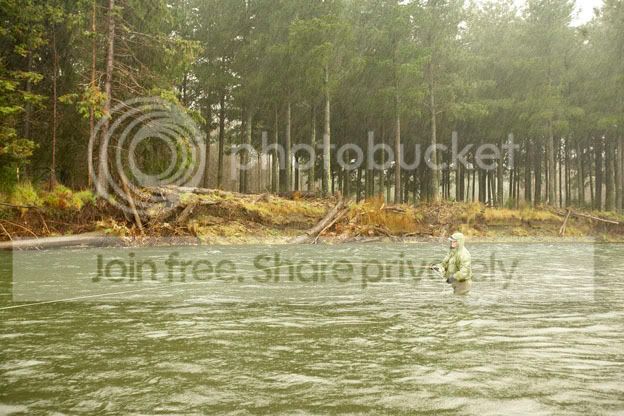
www.dsaphoto.com
A picture is thousand words that takes less than a second while a thousand words is a picture that takes a month.
May 12, 2008 at 10:55 am #63142 Simon ChuMember
Is this Gandalf on the Togas I see???!!! 😮 😮 ;D ;D
May 12, 2008 at 11:57 am #63143The Itinerant AnglerYOU… SHALL NOT… PAAASSSSSS!!!!!
Simon didn’t you play a hobbit in that movie?
May 12, 2008 at 12:25 pm #63144John BennettMemberlol Simon.
PS a long beard in there and the imagery is complete.May 13, 2008 at 3:01 am #63145Eric DeWitt
MemberI actually really like shooting during the overcast days.
May 13, 2008 at 3:31 am #63146Member ;DIs this Gandalf on the Togas I see???!!! 😮 😮 ;D ;D
Now that is funny.
May 13, 2008 at 5:09 am #63147Simon ChuMemberYOU… SHALL NOT… PAAASSSSSS!!!!!
Simon didn’t you play a hobbit in that movie? 😉
Zach
:-[ I too folically challenged 😉
My wife cast me as an Orc!May 13, 2008 at 7:12 am #63148andrew_bell
MemberDA , I can still feel ‘that’ rain dripping down the back of my collar
May 13, 2008 at 11:50 am #63149Michael PhillippeMemberZach,
Here’s an example of a shot that I think should have been much better.
By the way, it is on the Palena River in Chile and is now buried under several inches of ash from the Chaiten volcano!
Michael
May 13, 2008 at 1:10 pm #63150Anonymous
InactiveGreat topic.
May 13, 2008 at 1:26 pm #63151John BennettMember3)
Increasing exposure, in itself increases saturation…Becareful in boosting both contrast and saturation when in post. As a matter of personal preference I tend not to like overly saturated images. think fish with unnaturally saturated colours. Also again, personal preference images that have had contrast ramped in post also tend to look overdone and are somewhat easy to distinguish, further if your trying to increase contrast in post, imo the contrast/brightness sliders do the worst job. You can get better results with the levels adjustments and better yet curves. I havent touched the birghtness/contrast slider in a couple years.Bring a tripod, monopod or bean bag. If your not trying to stop action slow yourself and the camera down. Flash can help to add shadows and depth when none exist, but I’ll leave that to others, Im a rank beginner with flash photogrpahy.
Lastly if your not doing anything with the photos other than personal useage your free to do whatever you like with the skies. You can add cooling filters ( blues) and then saturate just that. You can go in your back yard today and tomorrow and take 20 different pictures of just sky with some nice white puffy clouds and then replace the grey dull sky in the images you bring home.
Others here are far more versed in PS than I am but to give you an idea, these 2 images were taken seconds apart.
Peggy’s Cove Nova Scotia in the fog

Peggy Cove 30 seconds before or after in the sun.

and Im not skilled at composites.
Both were shot at ISO 100 1/100th handheld.
May 13, 2008 at 1:37 pm #63152Inactivereminder that I do VERY little post photo work. Just a little to clean things up. When I hear the word Curves I think of Elle McPhearson or Jennifer Garner…not photography.
I am trying to get the best photo I can in the field…so increasing contrast or sat will be done in the box.
-
AuthorPosts
- You must be logged in to reply to this topic.