






Beginner Problem: Drag Free Drift
Blog › Forums › Fly Fishing › Beginner Problem: Drag Free Drift
- This topic has 31 replies, 6 voices, and was last updated Dec 5, 2006 at 3:42 am by
paul taylor.
-
AuthorPosts
-
Nov 6, 2006 at 10:59 pm #1683
paul taylor
Memberwell, i’m a beginner fly fisherman, well right now i’d categorize my self as a fly enthusiast until my skills get honed and i start catching fish on a regular basis.
my current issue is with achieving a true drag free drift while steelhead fishing in northwestern pennsylvania lake erie tribs.
Nov 6, 2006 at 11:57 pm #14144Zach Matthews
The Itinerant AnglerDamn, I need to make a video of this.
Nov 7, 2006 at 12:53 am #14145Memberzach,
wow!
Nov 7, 2006 at 1:11 am #14146prairiespey06
MemberYour question is a complex one and Zach has provided a remarkably detailed response. The variable in all controlled deep nymphing tech is the water you are fishing. Think of it
Nov 7, 2006 at 2:15 am #14147The Itinerant AnglerWill’s got a good point there about experimenting.
Nov 7, 2006 at 12:47 pm #14148Memberit’s definitely a trial and error process for me as i’m starting out.
Nov 7, 2006 at 1:03 pm #14149The Itinerant AnglerHey Paul –
Czech Nymphing is basically the lifting-and-dropping of the rod to control slack I described above as the nymph passes you.
Nov 7, 2006 at 7:10 pm #14150Memberthank you all for taking the time to help a rookie out!
paul
Nov 7, 2006 at 7:15 pm #14151Mark Landerman
MemberRoll cast-stack mend.
Nov 7, 2006 at 7:28 pm #14152steve154
MemberPaul, Czech nymphing involves the use of finely tuned and weighted, dense flies, usually three of them. They are setup so that the heaviest is in the middle(I think). There is very little fly line outside of the rod tip and all that is used is a flip back up stream once your drift is over. The technique is used in fast, broken water where you can wade with in a few feet of the fish. The flies are flipped up stream and led down stream on a tight line, with the rod held parrallel to the water. The drifts only a few feet long before you flip back upstream again. It is a fast, shotgunning, cover lots of water technique and I guess it is deadly in the right kind of water. I have some excellent links at home and will post them later.
High stick nymphing is kind of on the same line, but you are making a little longer cast and raising the rod high as the flies drift past you and then lowering as it goes by. weight is added to the tippet as needed and no floating indicator is used. It will kind of look like you are drawing a church steeple in the air with your rod tip. I like to maintain a fairly tight line and feel the flies/shot tick along the bottom every few feet of the drift and I know I am on the bottom. The old saying that if you are not getting hung up once in a while then you are not fishing deep enough is very true.
Steve
Nov 7, 2006 at 7:46 pm #14153MemberI made some pictures to help describe what I was talking about.
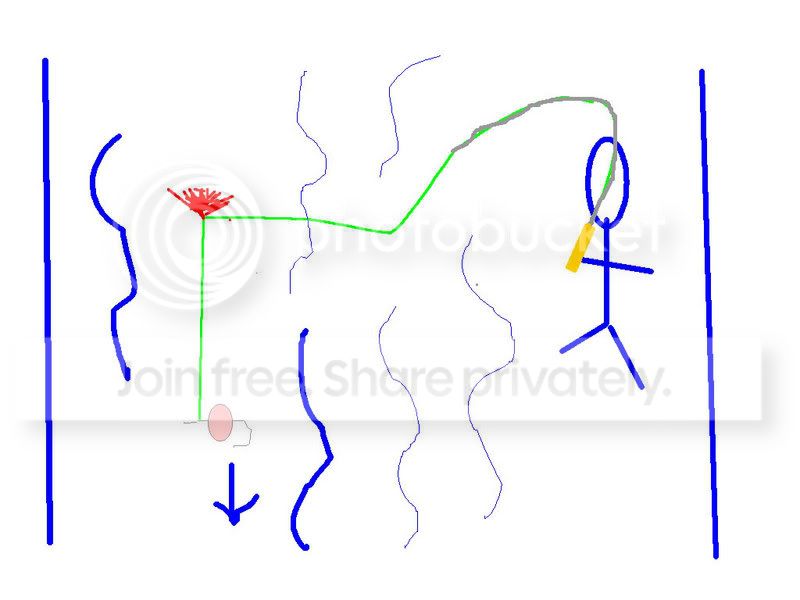
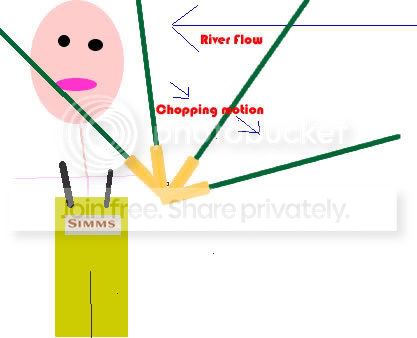
Or click on this link-scroll down to “puffball”
http://flyfisherman.com/dgmccloud/BTW-the top photo I am using my GLX and for the bottom one, my BIIX.
Nov 7, 2006 at 8:51 pm #14154Andrew Barclay
MemberThats hillarious…and hey, is that an egg pattern I see you using there?
Whats the technique called where you mimic an emerging insect by ending your drag free drift right under the trouts nose so that the pulling line brings the nymph to the surface?
Nov 7, 2006 at 9:15 pm #14155MemberI am not sure I am familiar with this technique, but I like to swing my nymhps at the end of a drag-free drift.
Nov 7, 2006 at 9:31 pm #14156MemberLiesenring lift? I am not sure if I use it, but I do like to let my nymphs swing up at the end of the drift. It is very effective at times and on some days I might get most takes as the fly starts to swing up.
Nov 7, 2006 at 10:13 pm #14157MemberDrag Free Drift-underwater

then………………………………………

And I usually do this “swing” with a soft hackle-not eggs.

Hope that helps.
Nov 7, 2006 at 10:20 pm #14158MemberPaul, sweet diagram.
I really think that you might not be getting down by attempting a right angle, exact depth of water presentation. I really think that this presentation is darn near impossible in all but slow pools. Try putting the indicator in-line and extending the distance from your shot to indicator to about 1.5-2.0X the depth of the water you are fishing. Put just enough weight on so that the indicator is going just slower than the surface currents. Your shot/weighted flies will be ticking and tumbling along and slowing it all down just a little bit and there will be a nice tight line to the indicator to transmit takes very quickly. Remember, the bottom currents, where the fish are and where you want your flies, are going slower than the surface currents. Watch and use the surface bubbles as speed indicators.
Nov 7, 2006 at 10:26 pm #14159The Itinerant AnglerSteve, I believe ol’ Mending Machine’s name is Mark.
Zach
Nov 7, 2006 at 10:32 pm #14160MemberSure is–and I like pie.
Zach-your way to tie the second fly on is quick, but have you used a pitzen in the eye of the hook?
Nov 7, 2006 at 10:33 pm #14161The Itinerant AnglerHey Mark –
No, I’ve never used a Pitzen knot, but I’d be willing to learn.
Zach
Nov 7, 2006 at 10:52 pm #14162MemberI am out of here for the day and I will work on something for tomorrow.
-
AuthorPosts
- You must be logged in to reply to this topic.